
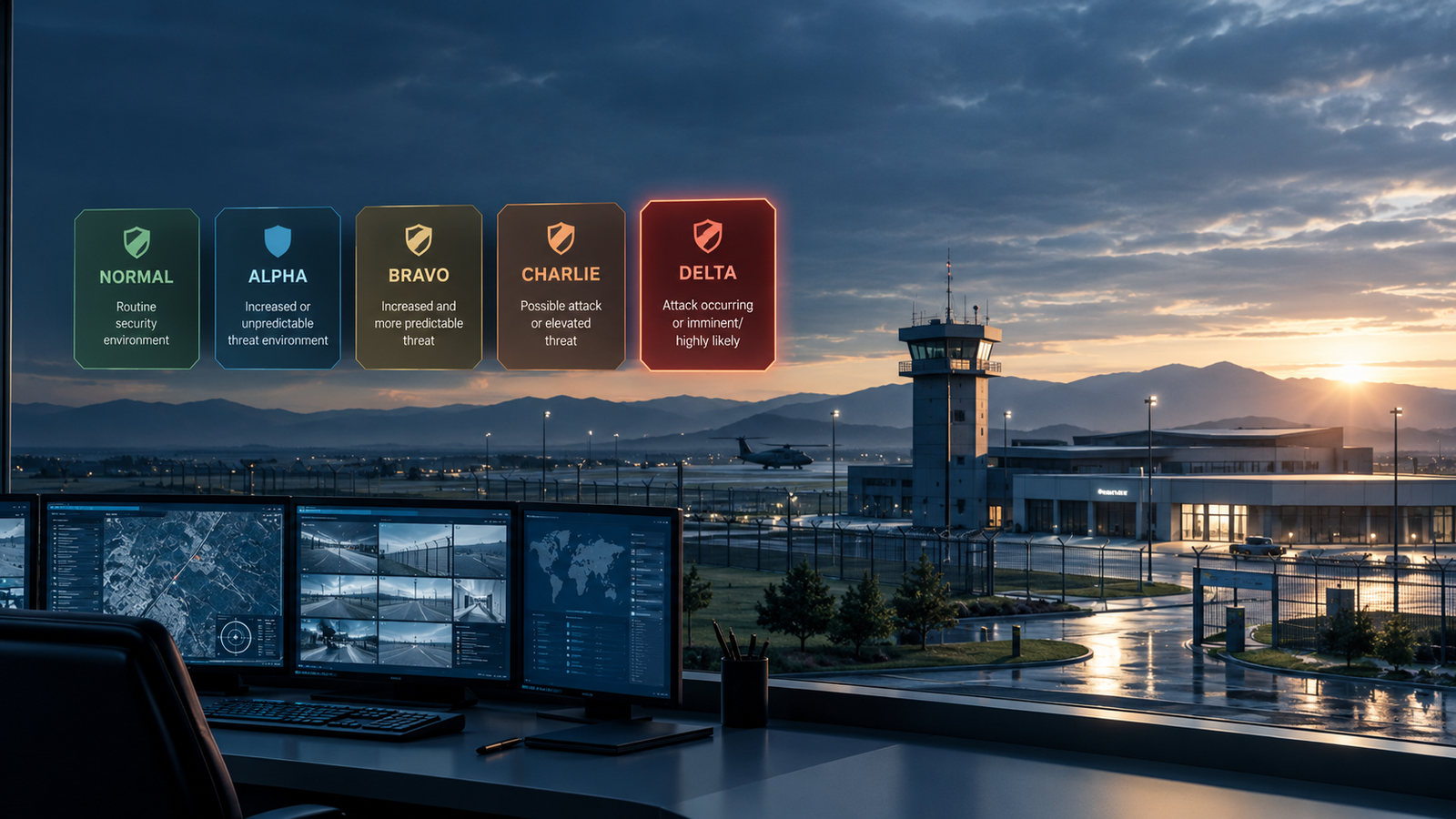
Understanding military security terminology is essential for anyone seeking to learn how military installations, government facilities, and other sensitive locations prepare for potential threats. One frequently searched question is: what is the most increased force protection level for a base/installation? The answer relates to the Force Protection Condition system, commonly abbreviated as FPCON, which helps military organizations communicate changes in security posture and respond to potential terrorist threats.
In the United States Department of Defense framework, FPCON DELTA is the highest of the five commonly recognized Force Protection Conditions: NORMAL, ALPHA, BRAVO, CHARLIE, and DELTA. This condition is associated with a terrorist attack occurring or intelligence indicating that an attack against a specific location or organization is imminent or highly likely, according to applicable official guidance.
However, understanding the highest level involves more than memorizing a name. Force protection is a broader security discipline that combines threat assessment, personnel awareness, access management, emergency preparedness, and coordination among responsible authorities. The measures implemented at any particular installation depend on its circumstances, applicable regulations, and instructions from authorized officials.
This guide explains the meaning of the highest Force Protection Condition, the purpose of the different levels, how these conditions affect military installations, and why accurate information matters when discussing security readiness.
Understanding Force Protection Conditions
Force Protection Conditions are standardized categories used by the United States military to communicate the general level of protective security measures required in response to changing threat information. The system helps commanders and security professionals establish an appropriate security posture without requiring every member of an organization to interpret intelligence independently.
The term force protection refers to measures intended to preserve military personnel, civilian employees, facilities, equipment, and operational capabilities from threats. These threats can include terrorism, sabotage, hostile activity, and other circumstances that could endanger people or interfere with a military mission.
The FPCON system provides a recognizable framework for escalating or adjusting protective measures. Each condition represents a different level of concern and preparedness. The precise measures associated with a condition are established through official policies, local procedures, and instructions issued by authorized leadership.
When readers ask, “what is the most increased force protection level for a base/installation?”, they are generally asking which condition represents the highest level of security readiness within this framework.
The answer is FPCON DELTA.
Although DELTA represents the highest condition, it does not necessarily mean that every military installation operates under identical restrictions. Threat information, the installation’s location, its mission, and the authority responsible for security can influence the measures adopted.
The Five Force Protection Conditions Explained
The five commonly recognized FPCON categories provide a progression from routine security operations to the highest level of protective readiness. Understanding their differences makes it easier to interpret military security announcements and official instructions.
FPCON NORMAL: Routine Security
NORMAL represents the baseline security posture. It does not mean that an installation is unprotected or that personnel can disregard security responsibilities. Instead, it indicates that routine protective measures are considered appropriate under the prevailing threat assessment.
At this level, installations continue to maintain established security procedures, monitor relevant information, enforce access requirements, and promote awareness among personnel.
Routine security is important because many protective practices are most effective when consistently applied rather than introduced only during emergencies.
Examples of general activities associated with routine security include maintaining established identification requirements, ensuring that visitors follow authorized procedures, reporting suspicious circumstances, and conducting ordinary emergency-preparedness activities.
The exact requirements vary by installation and organizational policy.
FPCON ALPHA: Increased Awareness
ALPHA generally indicates an increased or unpredictable threat environment in which additional precautions may be appropriate. The circumstances may warrant greater awareness even when there is no specific indication that an attack against a particular installation is imminent.
Personnel may receive reminders about reporting suspicious activity, reviewing security responsibilities, and remaining attentive to changes in their surroundings.
An increase to ALPHA does not automatically mean an attack is expected. Rather, it signals that the threat environment warrants additional attention and that established protective measures may need adjustment.
Communication is especially important at this stage. Personnel should understand the instructions relevant to their roles and rely on official announcements instead of speculation.
FPCON BRAVO: Increased and More Predictable Threat
BRAVO generally reflects an increased and more predictable threat of terrorist activity. It indicates that the assessed threat warrants a stronger protective posture than the preceding conditions.
An installation operating under BRAVO may introduce additional security precautions in accordance with its approved procedures. These changes are intended to improve preparedness and reduce vulnerabilities while supporting essential operations.
The condition does not establish that an attack will necessarily occur. Security decisions are based on available information, professional assessments, and the need to manage risk.
For personnel, the most important responsibilities are to follow current instructions, comply with established procedures, and report concerns through authorized channels.
FPCON CHARLIE: A Possible Attack or Elevated Threat
CHARLIE indicates that information suggests a terrorist incident may occur or that intelligence or other circumstances indicate a heightened threat requiring substantial protective attention.
The precise interpretation and implementation of CHARLIE are governed by the applicable official framework and the decisions of authorized commanders.
At this level, personnel may experience more noticeable security-related changes, and organizations may place greater emphasis on preparedness, coordination, and the protection of critical functions.
CHARLIE is an important reminder that security posture can change as information develops. Authorities must balance the need for protection with the practical requirements of maintaining essential activities.
It is also important not to confuse a security condition with a definitive prediction. The designation communicates an assessed threat environment; it does not independently establish that every possible threat will materialize.
FPCON DELTA: The Highest Force Protection Condition
DELTA is the highest condition in the commonly recognized five-level United States military FPCON system.
It is associated with a terrorist attack occurring or intelligence indicating that an attack against a particular location or organization is imminent or highly likely. The applicable official guidance determines how this condition is interpreted and implemented in a specific situation.
When people ask what is the most increased force protection level for a base/installation?, FPCON DELTA is the direct answer within this framework.
DELTA represents a serious security situation that requires action by responsible authorities. Protective measures may become more restrictive, and personnel may receive specific instructions intended to address the immediate circumstances.
Nevertheless, the term should not be interpreted as a universal checklist that applies identically everywhere. The measures adopted by a particular installation depend on authorized direction, the nature of the threat, and relevant security policies.
Personnel and visitors should follow official instructions, avoid spreading unverified claims, and use established channels to report urgent concerns.
Force Protection Levels Biography Table: Quick Reference
The following biography table provides a concise comparison of the five commonly recognized Force Protection Conditions. Here, the term biography table is used as a reference-table label rather than as a personal biography, because the subject is a security classification framework.
| Force Protection Condition | General meaning | Relative security posture |
|---|---|---|
| NORMAL | Routine security environment | Baseline |
| ALPHA | Increased or unpredictable threat environment | Elevated awareness |
| BRAVO | Increased and more predictable threat | Enhanced precautions |
| CHARLIE | Information indicates a possible terrorist incident or substantially elevated threat | High readiness |
| DELTA | A terrorist attack is occurring or an attack is assessed as imminent or highly likely under applicable guidance | Highest condition |
This table is a general educational summary, not an operational directive. Official definitions and implementation requirements should be confirmed through the relevant military authority.
The important distinction is that the conditions communicate different assessed threat environments. They are not simply five interchangeable labels for progressively larger quantities of security equipment or personnel.
Why FPCON DELTA Is Considered the Highest Level
FPCON DELTA occupies the top position because it addresses circumstances involving an attack that is occurring or a threat assessed as imminent or highly likely under the applicable framework.
At lower conditions, security measures generally respond to routine circumstances, increased awareness, or elevated threat assessments. DELTA is associated with a more immediate and serious security situation.
Several principles explain why this distinction matters.
Immediate Threat Recognition
The highest condition communicates that the situation requires urgent attention from responsible authorities. A serious or imminent threat may demand rapid decisions, coordinated communication, and careful implementation of protective instructions.
Recognizing the significance of DELTA helps personnel understand that official directions should be treated seriously and followed without delay.
Protection of Personnel and Facilities
Military installations support personnel, equipment, administrative functions, training, logistics, and other missions. A credible threat can endanger people and disrupt activities that depend on the installation.
The highest condition reflects the need to prioritize protection in response to circumstances that may present an immediate danger.
Coordinated Decision-Making
Security incidents often require cooperation among installation leadership, security professionals, emergency responders, and other authorized organizations.
A standardized condition helps communicate the general seriousness of the security environment. However, the designation alone does not replace specific emergency instructions or the responsibilities of the officials managing the situation.
Adaptation to Changing Circumstances
Threat assessments can change as new information becomes available. A condition that is appropriate at one point may need to be reassessed when the circumstances change.
FPCON DELTA therefore represents a security posture associated with a serious threat environment, rather than a permanent designation that must remain in place indefinitely.
What Happens When a Base or Installation Raises Its Force Protection Level?
The consequences of a change in Force Protection Condition depend on the installation’s approved procedures and the circumstances prompting the change. It is not accurate to assume that every base will respond in exactly the same way.
In general, a change in security posture can affect several broad areas of organizational activity.
Security Communication
Personnel may receive official notifications explaining the applicable condition and the instructions relevant to their responsibilities.
Clear communication helps reduce uncertainty, discourages the spread of rumors, and ensures that people understand which instructions apply to them.
Access and Visitor Procedures
Security conditions may affect access arrangements for personnel, contractors, and visitors. Individuals should consult current official instructions rather than assume that previous entry arrangements remain unchanged.
Anyone visiting a military installation should allow for the possibility of delays and comply with all lawful directions issued by authorized personnel.
Emergency Preparedness
An elevated threat environment can lead organizations to review emergency communications, personnel responsibilities, and continuity arrangements.
Preparedness helps ensure that individuals know how to receive official updates, report urgent concerns, and respond appropriately when an emergency instruction is issued.
Continuity of Essential Operations
Military installations often perform functions that must continue despite disruptions. Security decisions may therefore consider both the protection of personnel and the need to maintain essential operations.
The balance between security restrictions and operational continuity depends on the mission, the circumstances, and authorized leadership decisions.
Coordination With Responsible Authorities
A significant threat may require coordination among different security and emergency-management organizations. Defined responsibilities and reliable communication are essential to ensure that protective actions are consistent with applicable policy.
The public should not assume that every internal response measure is announced in detail. Some procedures are governed by security requirements that are not intended for unrestricted public distribution.
Who Determines the Force Protection Condition?
The authority responsible for setting or implementing a Force Protection Condition depends on the organization, installation, applicable command structure, and governing policy.
Within the United States Department of Defense, commanders and other authorized officials have responsibilities defined by the relevant force protection framework. Decisions may take account of threat information, intelligence assessments, security advice, and the operational circumstances of the installation.
The process is not simply a matter of an individual observing a suspicious event and independently declaring the entire installation to be at DELTA.
Instead, security conditions are managed through established command and decision-making arrangements. Those arrangements help ensure that changes are authorized, communicated, and implemented consistently with the relevant policy.
For visitors, contractors, and employees, the practical rule is straightforward: follow the condition and instructions officially communicated by the responsible authority.
Does FPCON DELTA Mean an Attack Is Guaranteed?
No. Although DELTA is associated with an occurring attack or an imminent or highly likely threat under applicable guidance, the designation should not be treated as a guarantee about what will happen next.
Security classifications communicate assessments of risk and the circumstances under which protective action is considered necessary. They do not provide certainty about every future event.
This distinction is important for several reasons.
First, threat information may be incomplete or change as an investigation develops. Second, security officials must make decisions based on the information available at the time. Third, protective measures are intended to reduce risk, even when the eventual outcome remains uncertain.
A high security condition should therefore be taken seriously without encouraging panic.
Personnel should follow official instructions, avoid spreading unconfirmed information, and obtain updates from authorized sources.
Is FPCON DELTA Used at Every Military Installation?
The five-level FPCON framework is widely associated with United States military security terminology, but the way it is applied can differ across organizations and circumstances.
Different installations may have distinct missions, threat environments, local procedures, and command arrangements. Some organizations outside the United States military may also use different security classification systems.
Consequently, the answer to what is the most increased force protection level for a base/installation? should always be understood within the context of the framework being discussed.
For a question specifically about the standard five-condition United States military system, DELTA is the highest condition. For a facility operating under another national, departmental, or organizational framework, the terminology and structure may differ.
Readers should not assume that a similarly named category in another system has precisely the same definition.
Force Protection Versus General Security
Force protection and general security overlap, but they are not identical concepts.
General security can refer to a broad range of measures intended to protect buildings, information, people, property, and organizational activities. Force protection is particularly concerned with safeguarding military forces, personnel, facilities, and capabilities against threats that could harm them or interfere with their mission.
Force protection can involve several disciplines, including:
- Threat and risk assessment.
- Security awareness and incident reporting.
- Personnel protection.
- Emergency preparedness and response.
- Access management under approved procedures.
- Coordination among responsible authorities.
- Continuity of essential functions.
The FPCON system provides a way to communicate the overall threat-related security posture within the applicable military framework.
It does not replace other security policies, emergency plans, or specialized procedures. Instead, it operates alongside them.
Why Security Awareness Matters at Every Condition
It may be tempting to associate security awareness only with CHARLIE or DELTA. In reality, consistent awareness is important at every condition.
Routine reporting, compliance with established procedures, and attention to official communications help organizations maintain a reliable security culture. Waiting until a threat becomes urgent before taking security seriously can undermine the effectiveness of preventive measures.
Recognizing Unusual Circumstances
Personnel should pay attention to circumstances that reasonably warrant concern, while avoiding assumptions based on appearance, identity, or rumor.
The appropriate response to a genuine security concern is to report relevant observations through the designated channel rather than attempt an unauthorized investigation.
Following Official Instructions
Instructions issued by authorized personnel may change when the security environment changes. Individuals should consult current guidance and avoid relying exclusively on outdated notices or secondhand accounts.
Communicating Responsibly
Unverified claims can create confusion during a security incident. Sharing only confirmed information through appropriate channels helps protect personnel and supports an orderly response.
Understanding Individual Responsibilities
Employees, contractors, military personnel, and visitors may have different obligations under installation policy. Knowing the instructions applicable to one’s role is an important part of preparedness.
These principles remain relevant whether an installation is operating under NORMAL or the highest condition.
Common Misunderstandings About Force Protection Levels
Several misconceptions can lead to inaccurate interpretations of military security announcements.
Misconception 1: DELTA Means Every Base Is Under Attack
DELTA is associated with an occurring attack or an imminent or highly likely threat under applicable guidance. Its use does not automatically mean that every military base is experiencing an active attack.
The relevant circumstances and official announcement must be considered.
Misconception 2: NORMAL Means There Is No Risk
NORMAL describes the baseline security posture, not an absence of all threats. Every installation must continue applying its routine security responsibilities.
Misconception 3: Each Condition Has Identical Procedures Everywhere
The FPCON categories provide a common framework, but their implementation can depend on local policy, mission requirements, and authorized decisions.
A simplified internet summary should not be treated as a substitute for official instructions.
Misconception 4: A Higher Condition Always Means Every Activity Stops
An elevated security posture can affect operations, but the precise consequences depend on the circumstances and applicable orders. It is inaccurate to assume that every installation automatically suspends every activity at the highest condition.
Misconception 5: The Condition Alone Explains the Entire Threat
A condition communicates a general security posture. It does not necessarily reveal every detail of the threat assessment, the source of intelligence, or the full set of protective measures being implemented.
Understanding these distinctions makes public discussions of force protection more accurate and responsible.
How to Interpret Official Force Protection Announcements
When an installation announces a change in Force Protection Condition, readers should focus on the information that is officially provided.
The condition identifies the applicable category within the relevant framework. Additional instructions may explain what personnel, visitors, or contractors need to do.
A responsible interpretation involves three principles.
First, distinguish the general condition from the specific instructions accompanying it. Second, confirm that the announcement applies to the relevant installation or organization. Third, consult an authorized source when the meaning or applicability of an instruction is unclear.
These principles are especially important when information circulates through social media or informal discussion. A message may be outdated, refer to another location, or omit essential context.
People should avoid attempting to infer sensitive security arrangements from a condition label alone. Public-facing announcements should be interpreted at the level of detail provided by the responsible authority.
The Importance of Force Protection in Modern Military Operations
Military installations are more than physical locations. They support the personnel, logistics, administration, training, communications, and other activities required for military readiness.
A disruption affecting an installation can therefore have consequences beyond the immediate facility. Force protection helps organizations reduce exposure to threats and preserve their ability to perform essential functions.
Protecting Personnel
The safety of military and civilian personnel is a central consideration. Effective protection depends on appropriate policies, awareness, preparedness, and timely communication.
Preserving Operational Readiness
Security incidents can disrupt routine work and interfere with mission requirements. Protective measures help reduce the likelihood that a threat will prevent an organization from carrying out its responsibilities.
Supporting Public Confidence
Clear, responsible communication helps personnel, families, contractors, and visitors understand official directions without relying on speculation.
Encouraging Consistent Procedures
A shared terminology can help different elements of an organization communicate about security posture. Its value depends on accurate implementation and a clear understanding of individual responsibilities.
The five-condition framework contributes to these objectives by providing a recognizable way to describe the assessed security environment.
How Force Protection Conditions Relate to Risk Management
Risk management is the process of identifying potential hazards, evaluating their significance, and selecting appropriate measures to reduce their effects.
Force protection uses this general logic in a military security context. Authorities assess available information and determine what level of protective attention is appropriate.
Several factors can influence such decisions, including the credibility of threat information, the potential consequences of an incident, the nature of the installation’s mission, and the applicable security policies.
The result is not necessarily a perfectly predictable response. Risk assessment involves uncertainty, and decisions may need to be reviewed as circumstances evolve.
FPCON DELTA reflects the highest category in the commonly recognized five-level framework, but the designation does not eliminate uncertainty. It communicates a serious threat-related security posture and the need to follow authorized measures.
This is why understanding the framework requires both knowledge of the condition names and an appreciation of the decision-making process behind them.
Public Information and Responsible Security Discussions
Military security is a subject of legitimate public interest. People may want to understand an announcement because they work on an installation, plan a visit, have family members serving in the military, or are researching defense terminology.
Educational information can explain the general meaning of the FPCON categories without disclosing sensitive operational details.
Responsible discussion should distinguish publicly established definitions from assumptions about a particular installation. It should also avoid presenting unofficial claims as verified intelligence.
When information about a security incident is uncertain, the best approach is to consult the relevant official announcement and follow any applicable instructions.
The central question, what is the most increased force protection level for a base/installation?, has a straightforward answer within the standard five-level framework. However, understanding the significance of that answer requires attention to context, official authority, and the difference between a general classification and a specific operational order.
Frequently Asked Questions (FAQs)
1. What is the most increased force protection level for a base/installation?
The highest condition in the commonly recognized United States Department of Defense five-level FPCON framework is FPCON DELTA. It is associated with a terrorist attack occurring or intelligence indicating that an attack is imminent or highly likely under the applicable guidance.
2. What does FPCON DELTA mean?
FPCON DELTA represents the highest condition in the five-level system. It signals a serious threat environment requiring action in accordance with authorized security procedures. Its precise implementation depends on official guidance and the circumstances involved.
3. How many Force Protection Conditions are there?
The commonly recognized United States military framework has five conditions: NORMAL, ALPHA, BRAVO, CHARLIE, and DELTA. They represent different security postures in response to assessed threats.
4. Is FPCON DELTA higher than FPCON CHARLIE?
Yes. DELTA is the highest condition in the standard five-level framework, while CHARLIE is the level immediately below it.
5. Does FPCON DELTA mean an attack is happening right now?
Not necessarily. DELTA is associated with an attack occurring or intelligence indicating that an attack is imminent or highly likely under applicable guidance. The designation alone does not establish that an attack is taking place at every affected location.
6. What is the difference between FPCON ALPHA and FPCON BRAVO?
ALPHA generally indicates an increased or unpredictable threat environment. BRAVO generally indicates an increased and more predictable threat. The specific measures associated with either condition depend on applicable policy and authorized instructions.
7. What does FPCON CHARLIE indicate?
CHARLIE indicates that information suggests a terrorist incident may occur or that circumstances indicate a heightened threat requiring substantial protective attention. Its exact meaning and implementation should be understood through the applicable official guidance.
8. Who determines the Force Protection Condition at a military installation?
The responsible authority depends on the installation’s command structure and applicable policies. Within the United States Department of Defense, authorized commanders and officials make or implement decisions in accordance with the governing framework.
9. Does a higher FPCON automatically close a military base?
No universal rule means that every installation automatically closes whenever a higher condition is introduced. Operational restrictions depend on the threat, mission requirements, and instructions issued by authorized officials.
10. Does FPCON NORMAL mean an installation is completely safe?
No. NORMAL represents the baseline security posture, not a guarantee that no threat exists. Routine security practices and awareness remain important at every condition.
11. Are Force Protection Conditions the same in every country?
No. Other countries and organizations may use different terminology, structures, and procedures. The five-level framework discussed here is associated with United States military force protection terminology.
12. Can Force Protection Conditions change?
Yes. Security conditions may be reassessed as threat information and circumstances change. Authorized officials determine whether adjustments are appropriate under the relevant policy.
13. What should visitors do when a military installation raises its security condition?
Visitors should follow official instructions, comply with applicable access procedures, and consult authorized installation communications for current requirements. They should not rely on outdated information or unverified social media claims.
14. Why is FPCON DELTA important in military security?
DELTA communicates the highest condition in the commonly recognized five-level framework. It helps convey the seriousness of a threat environment and the need for authorized protective action.
15. Is the highest Force Protection Condition permanent?
No. A condition is associated with the assessed circumstances at a particular time. Its continuation or adjustment depends on the threat environment and decisions made under applicable policy.
16. What is the main purpose of the FPCON system?
Its primary purpose is to provide a standardized way to communicate security posture and guide protective measures in response to assessed threats. It supports coordination, preparedness, and the protection of personnel and military capabilities.
A Clearer Understanding of Military Security Readiness
Understanding force protection terminology helps readers interpret military security announcements without confusing a formal condition with an exact prediction of events. The five-level framework offers a shared vocabulary for describing security posture, but its practical application remains dependent on official guidance and the circumstances of each installation.
The most useful approach is to understand the meaning of the condition, recognize the role of authorized decision-makers, and follow the instructions relevant to one’s circumstances. Accurate information, consistent awareness, and responsible communication remain important regardless of the security posture in effect.
For anyone researching what is the most increased force protection level for a base/installation?, the essential distinction is clear: FPCON DELTA is the highest condition in the commonly recognized United States military five-level system. Its significance lies in the seriousness of the associated threat environment and the requirement for appropriate action under established security procedures.
Knowing that definition provides a foundation for understanding the broader role of force protection in safeguarding people, facilities, and military readiness.

2 Comments
Pingback: What Is Moxhit4.6.1 Software About? A Comprehensive Guide - Lyncconfs
Pingback: How Often Should You Upgrade a Gaming PC? Jogameplayer Guide - Lyncconfs