
The digital creator economy has expanded the ways individuals can turn creative skills into professional opportunities. Independent designers, online entrepreneurs, and hobbyists can now develop digital products for audiences around the world without necessarily operating a traditional studio. Yet creating three-dimensional assets remains challenging for people who lack extensive modeling experience or the resources to hire specialists.
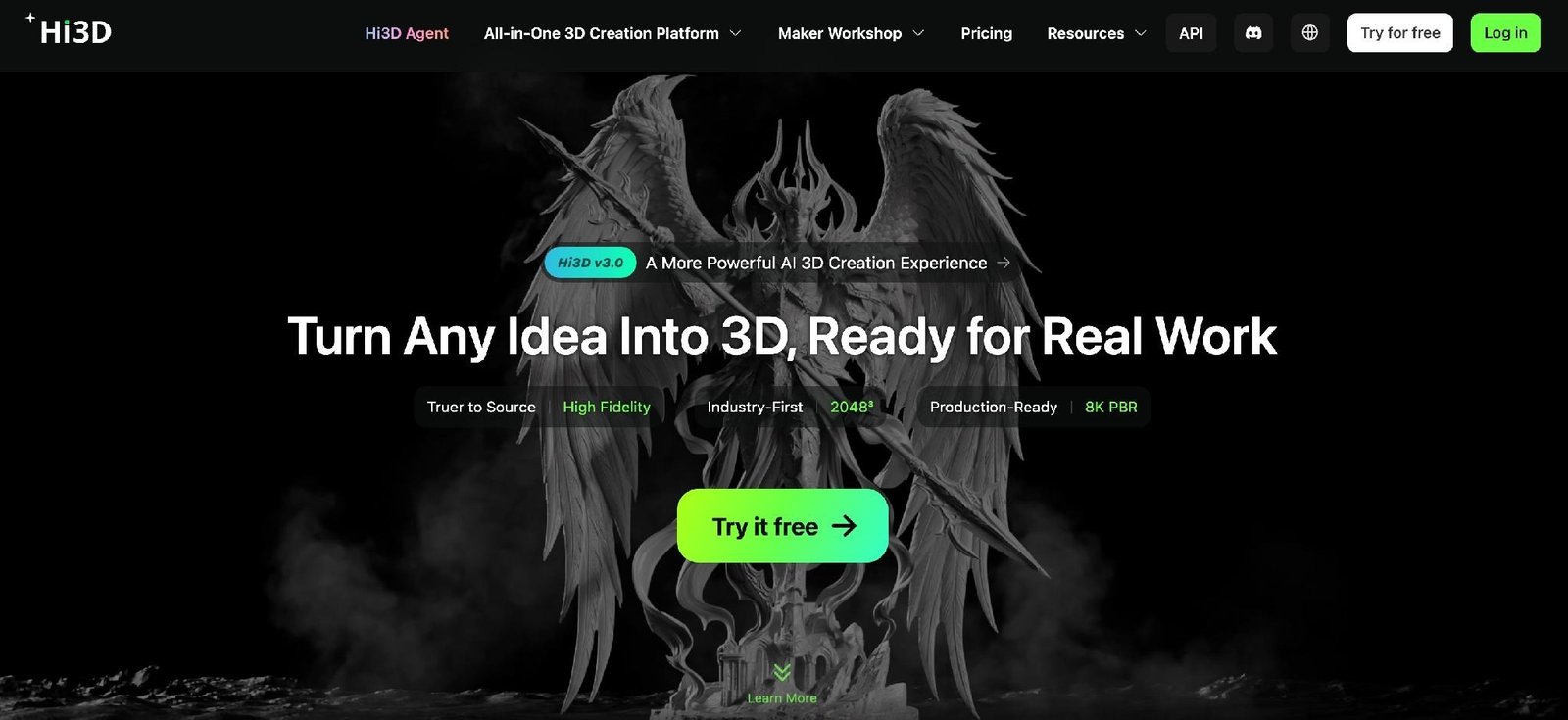
Artificial intelligence is changing this landscape by making parts of the 3D creation process more accessible. Hi3D offers tools for generating and refining three-dimensional models, serving as an AI 3D model maker that gives independent creators another way to develop ideas into digital assets. From experimenting with niche product concepts to building a portfolio of original designs, AI-assisted modeling can support a more flexible approach to creative entrepreneurship.
Exploring Niche Markets Through Three-Dimensional Design
Independent creators often compete by serving audiences with specific interests rather than attempting to appeal to everyone. Collectors, tabletop gaming enthusiasts, cosplay fans, and people interested in personalized decorations may look for designs that are difficult to find through mainstream retailers.
These niche markets can provide opportunities for original digital products. A creator might develop themed accessories, miniature concepts, decorative objects, or distinctive props that reflect the interests of a particular community.
The challenge is turning an idea into a model that can be evaluated and developed further. Traditional modeling may require substantial technical knowledge, particularly when the design contains intricate shapes or unusual proportions.
Hi3D helps lower the initial barrier by supporting image-to-3D generation. Creators can use suitable visual references to produce a starting model, then assess whether its overall form matches the intended concept.
This makes it possible to explore ideas before investing heavily in detailed modeling. A creator could investigate several concepts for a themed collection, identify the most promising direction, and devote additional effort to the designs with the strongest potential.
However, generating a model does not establish that a market exists for it. Creators still need to understand their intended audience, examine competing products, and consider whether their designs offer a meaningful difference.
AI-assisted generation is most valuable when it supports informed experimentation rather than replacing market research or creative judgment.
Developing a Distinctive Portfolio
A portfolio helps independent creators demonstrate their capabilities and communicate the kinds of projects they can undertake. For someone entering the 3D design market, building a portfolio can be difficult because each finished model may require considerable time.
AI-powered tools can help creators explore more concepts during the early stages of portfolio development. Instead of beginning every project with manual construction, they can generate initial models from visual references and use them to investigate different styles or subject categories.
Hi3D provides a starting point for this process through its model-generation capabilities. A creator might develop a series of decorative objects, stylized characters, or imaginative props that share a recognizable visual direction.
The goal should not be to fill a portfolio with as many generated assets as possible. A smaller collection of carefully selected and refined models can communicate more about a creator’s abilities than a large assortment of inconsistent results.
Each portfolio piece should demonstrate a clear idea, an intentional design choice, or a useful application. Creators can also document the development process to show how they evaluated and improved the initial output.
Before publishing an asset, they should check its geometry, appearance, and suitability for the intended purpose. If a model is presented as a finished professional product, it should meet the relevant quality expectations.
A thoughtful portfolio combines the speed of AI-assisted experimentation with the creator’s own artistic direction and quality control.
Turning Creative Ideas into Digital Products
Digital products offer independent entrepreneurs a way to distribute creative work without shipping a physical item for every sale. Depending on their skills and audience, creators may develop assets for compatible games, visualization projects, digital content, or other creative applications.
Three-dimensional models can form part of this market, but their commercial usefulness depends on more than their appearance. Buyers may need specific file formats, reliable geometry, appropriate materials, and clear information about how an asset can be used.
Hi3D supports several common 3D export formats, including OBJ, GLB, FBX, STL, USDZ, and 3MF, depending on the feature and workflow. This gives creators options when preparing assets for different applications.
For example, a model intended for a compatible digital visualization environment may need different preparation from one designed for 3D printing. A creator selling assets to other professionals should understand the requirements of the target audience before deciding which formats to provide.
Exporting a file does not guarantee that it is ready for commercial distribution. Some models may need geometry cleanup, material adjustments, optimization, or testing in the software where customers intend to use them.
Creators should also provide accurate descriptions and explain any important limitations. A digital product listing should make clear what the buyer receives and whether additional editing is required.
When these practical details are addressed, AI-assisted generation can become one component of a repeatable digital product development process.
Exploring Physical Products Without a Large Studio
Not every independent creator wants to sell digital files. Some may prefer to develop tangible products such as miniature decorations, collectibles, desk accessories, or customized gifts.
Three-dimensional printing offers a route from a digital model to a physical item, although successful production requires attention to dimensions, geometry, material properties, and assembly.
Hi3D includes printing-oriented capabilities that can help prepare certain models for physical production. Its model-splitting tools allow users to split 3D model into parts and generate connections between components, helping prepare models that need to fit together.
These functions can be useful when exploring objects that are inconvenient to print as a single piece. They may also help creators investigate different assembly arrangements before deciding whether a design is suitable for production.
Nevertheless, an AI-generated model should not be treated as manufacturing-ready without inspection. Thin features, weak connectors, unsuitable wall thicknesses, and complicated overhangs can create problems during printing.
A sensible approach is to begin with a manageable prototype, inspect the result, and revise the design where necessary. This helps creators identify production issues before committing to a larger batch.
Hi3D also offers a printing and delivery service, subject to availability and applicable conditions, which may provide an alternative for people who do not own a suitable printer.
For independent entrepreneurs, the main advantage is the opportunity to explore physical product concepts without immediately investing in a complete in-house production setup.
Testing Product Ideas Before Investing Heavily
One of the risks of creative entrepreneurship is spending too much time developing a product before confirming whether it meets customer needs. A detailed model may represent weeks of work, yet the concept may attract little interest once it reaches its intended audience.
Early experimentation can help reduce this uncertainty. Creators can begin with a basic representation, evaluate its visual appeal, and gather feedback before investing in extensive refinement.
Hi3D can support this early exploration by generating initial models from visual concepts. These models can help creators communicate an idea more clearly when discussing it with potential customers, collaborators, or other members of their target community.
However, creators should distinguish between testing interest in a concept and validating a finished product. A visual mockup can help people understand an idea, but it does not prove that the product can be manufactured reliably or sold profitably.
Any public-facing preview should also be presented honestly. If the displayed model is preliminary, viewers should not be led to believe that every detail has already been finalized.
After gathering feedback, creators can decide whether the concept deserves further development, needs significant changes, or should be set aside.
This approach helps direct creative effort toward ideas that justify additional investment instead of treating every initial concept as a future product.
Managing Time and Production Costs
Independent creators often have to balance design work with marketing, customer communication, and the practical responsibilities of running a small business. Time spent on repetitive modeling tasks is time that cannot be used elsewhere.
AI-assisted generation can reduce some of the effort involved in establishing an initial model, but it does not remove every production cost. Creators still need to account for subscriptions, usage credits, refinement, software compatibility, testing, and any physical manufacturing expenses.
Hi3D offers a Free plan with limited usage, allowing users to explore selected capabilities before committing to a larger workload. Current credit allowances, feature access, and pricing conditions should be checked before planning a commercial project.
When estimating costs, creators should consider the entire process rather than looking only at the time needed to generate a model. A result that requires extensive correction may provide less practical value than one that needs only minor adjustments.
It is also useful to establish a reasonable quality threshold for each project. A concept created for internal evaluation may not require the same level of refinement as a product intended for paying customers.
By matching the level of effort to the asset’s intended purpose, creators can make more informed decisions about where AI generation saves time and where additional work remains necessary.
Protecting Originality and Building Customer Trust
AI tools make it easier to generate visual ideas, but accessibility also means that multiple creators may explore similar themes. A recognizable product identity therefore requires more than the ability to produce a model.
Independent creators can differentiate their work through thoughtful concepts, consistent visual choices, audience knowledge, and careful refinement. Their expertise lies not only in producing an asset but also in deciding what makes it useful or distinctive.
When using Hi3D, creators should treat generated output as material to evaluate rather than automatically considering every result a finished original product. They can identify what works, refine the design, and make deliberate decisions about the final presentation.
Reference selection also matters. Creators should use images and other materials they have the right to use, particularly when developing assets for commercial purposes. They should review applicable platform terms and relevant intellectual property requirements before selling or distributing generated work.
Customer trust depends on accurate product descriptions, realistic previews, and clear licensing terms. Buyers should understand whether a file is suitable for printing, whether editing is required, and what uses are permitted under the applicable license.
Responsible practices help independent businesses establish more sustainable relationships with their customers.
Expanding Beyond Individual Model Creation
As a creator’s business grows, the needs of the business may change. Someone who initially produces models for personal projects may eventually want to offer customized design services, develop a larger catalog, or integrate generation capabilities into a digital product.
Hi3D’s API provides an option for developers exploring supported integration workflows. Depending on the available capabilities and technical requirements, businesses may investigate incorporating AI-assisted model generation into their own applications or services.
For example, a creative platform could explore a workflow in which users provide visual references and receive three-dimensional assets for further development. Building such a service would require additional work involving the user interface, file management, quality checks, usage controls, and cost planning.
An API does not automatically create a complete commercial product. Developers must determine whether the available operations meet their needs and test how the service performs with realistic inputs.
Creators who are not developing software can still benefit from establishing a consistent process for naming files, organizing projects, reviewing models, and preparing deliverables.
These practices become increasingly valuable as the number of assets grows. A well-organized collection is easier to update, distribute, and maintain than a folder of unreviewed generated files.
Building a Sustainable Creative Business with Hi3D
Independent digital entrepreneurship requires a combination of creative ideas, technical execution, and practical business decisions. AI-assisted modeling can help with part of this work by making it easier to explore three-dimensional concepts and establish initial assets.
Hi3D offers a way to generate models from visual references, refine selected results, and prepare assets for different digital or physical applications. These capabilities can support creators who are developing a portfolio, investigating niche markets, or experimenting with potential products.
The most effective starting point is a specific, manageable project. A creator might develop one model for a clearly defined audience, evaluate its quality, and determine what additional work would be needed before distribution or production.
From there, the creator can assess audience interest, estimate costs, and establish quality standards for future projects. Not every generated model will become a viable product, and not every market will justify further investment. Learning from these experiments is part of developing a sustainable business.
Hi3D does not replace market knowledge, original thinking, or careful product preparation. Instead, it offers an additional resource for turning creative concepts into three-dimensional assets that can be evaluated, refined, and potentially developed into commercial offerings.
