
Table Of Contents
- Why an EV Safety Checklist Matters
- What to Check Before Driving
- Battery Warning Signs to Watch
- Safe Charging Habits
- How to Check Recalls and Software Updates
- What to Do After a Crash or Flood
- When to Use a Qualified EV Technician
- Used EV Inspection Checklist
- Building an Emergency Plan
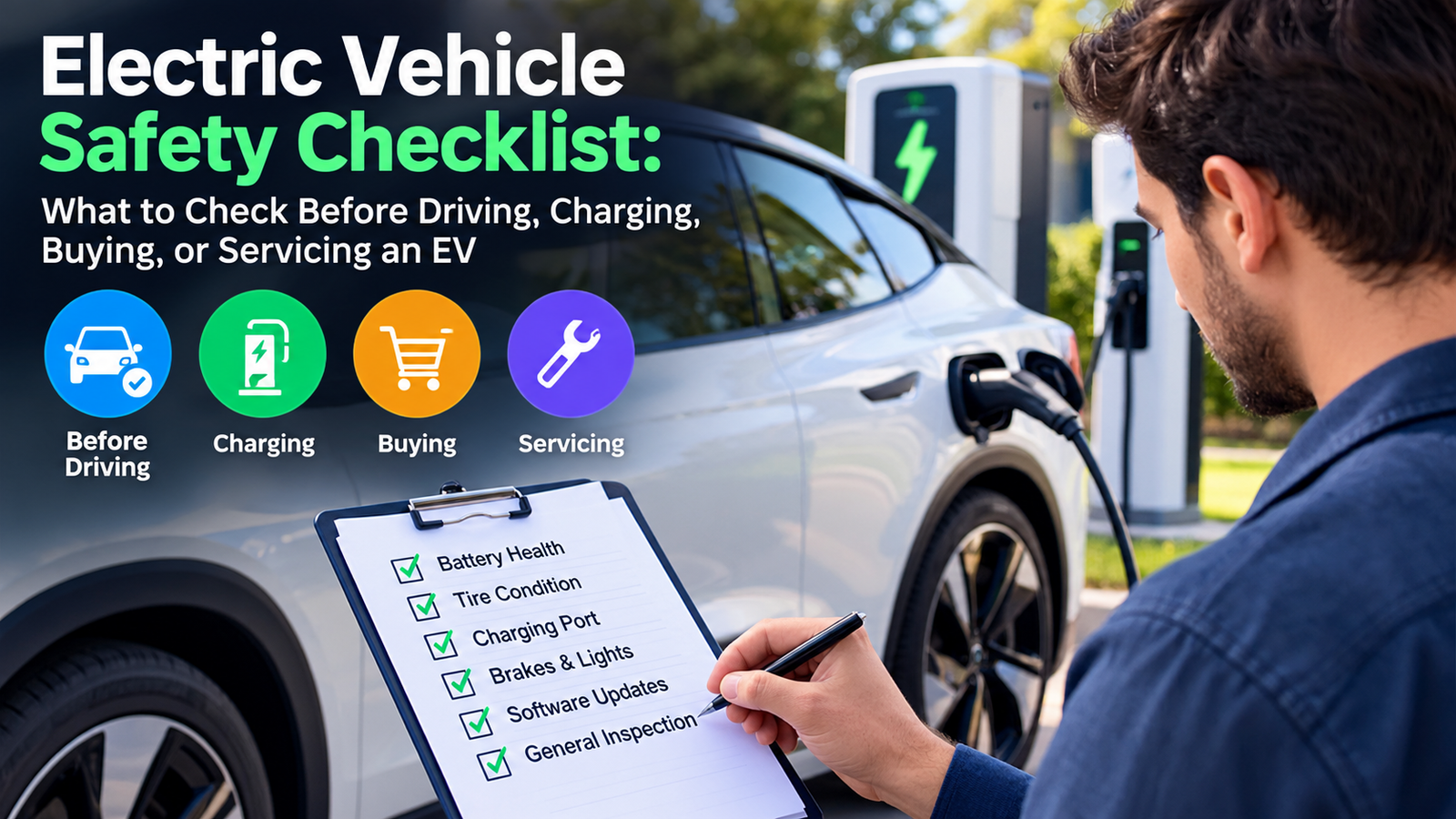
Electric vehicles are designed for everyday use, but they combine familiar road-going equipment with a high-voltage battery and electrical system. A short, consistent safety check can help you notice damage, warning messages, tire problems, or charging issues before they become a more serious issue.
That routine is particularly important when researching a used EV or investigating a pattern of vehicle issues. For example, drivers considering certain models may want to understand recurring Bolt problems before making a purchase or deciding how to address repeated repairs. Always use your vehicle’s owner’s manual as the final authority for model-specific warnings, towing instructions, and charging procedures.
Why an EV Safety Checklist Matters
An EV still needs the same basic checks as any other vehicle, including attention to tires, lights, brakes, body damage, and dashboard warnings. It also has a traction battery, charging components, power electronics, and high-voltage cables that should not be handled casually. A few minutes of observation can help you decide whether it is reasonable to drive, charge, schedule service, or stop using the vehicle until it is inspected.
What to Check Before Driving
Do a quick exterior walkaround.
- Look for fresh body damage, loose trim, cracked lamps, broken mirrors, or a charge-port door that will not close securely.
- Check each tire for low pressure, cuts, bulges, exposed cords, or unusually uneven wear.
- Look beneath the vehicle for debris, fresh fluid, or signs that the underside may have struck a curb, road object, or parking barrier.
- Make sure the charging cable has been disconnected and stored before driving away.
Review the dashboard before shifting.
Start the vehicle and read any warning messages before selecting drive or reverse. Do not dismiss alerts about reduced power, the charging system, battery condition, braking, or tire pressure simply because the vehicle still appears to operate normally. Take a photo of persistent messages so a service department can see the exact wording later.
Battery Warning Signs to Watch
Battery and electrical concerns can show up as a warning message, an unusual smell, heat, noise, charging failure, or a change in vehicle behavior. Stop using the vehicle and seek professional guidance if you notice smoke, hissing, popping sounds, a burning or chemical odor, unusual heat near the battery area, visible damage underneath the vehicle, or a serious loss of propulsion power.
Repeated charging interruptions or a warning that returns after restarting also deserve attention. Do not open the battery enclosure, cut orange high-voltage cables, probe connectors, or attempt a home repair. The traction battery requires specialized training and equipment.
Safe Charging Habits
Before plugging in
- Inspect the cable, connector, and outlet or charging station for cuts, melted material, bent pins, corrosion, or obvious damage.
- Use equipment compatible with the vehicle and install it according to applicable electrical requirements.
- Keep connectors and outlets clear of standing water, and do not force a plug that does not fit correctly.
- Follow the owner’s manual for charging limits, connector use, and any conditions that require delayed or restricted charging.
While charging
Stop the session if a connector, cable, or outlet becomes unusually hot, smells burnt, or shows discoloration. Avoid damaged cords, makeshift adapters, and extension cords not approved for EV charging. A qualified electrician should evaluate a home charging setup if breakers trip, outlets feel warm, or charging repeatedly fails.
How to Check Recalls and Software Updates
A general make-and-model search is useful, but it does not tell you whether a particular vehicle has an unresolved safety recall. The vehicle identification number, or VIN, provides a more specific result. You can use the VIN recall search to identify unrepaired recalls associated with the vehicle, then contact the manufacturer or an authorized dealer to confirm the available remedy.
Keep repair orders, recall notices, and software update confirmations with the vehicle records. Follow any interim manufacturer instructions carefully, including restrictions about driving, parking location, or charging. If a seller says a recall was completed, ask for documentation rather than relying on verbal assurance.
What to Do After a Crash or Flood
After a collision
Move out of traffic only if it is safe, turn off the vehicle, and avoid touching exposed wiring or damaged components. Tell emergency responders that the vehicle is electric or hybrid. Even a minor collision can damage parts beneath the vehicle, so do not charge or return the EV to ordinary use until a qualified professional has evaluated the impact damage.
After flood exposure
Do not start or charge an EV that has been submerged or exposed to significant flooding. If practical, keep it away from buildings, other vehicles, and combustible materials while you seek instructions. Federal guidance on electric and hybrid vehicle battery safety warns that exposure to floodwaters can create high-voltage shock and fire hazards. Contact the manufacturer, roadside provider, emergency services, or a trained repair facility for direction.
When to Use a Qualified EV Technician
Choose a repair facility that is prepared to work on your vehicle’s high-voltage system. Ask whether its technicians have EV training, properly insulated tools, and the diagnostic equipment needed for your make and model. Request a written estimate before authorizing major work, and retain diagnostic reports, invoices, and notes about any recommended follow-up testing.
Used EV Inspection Checklist
- Run the VIN through the recall lookup tool and ask whether all applicable repairs were completed.
- Review title and vehicle-history records for flood, salvage, or collision information.
- Inspect the charge port for corrosion, burns, loose parts, or damage.
- Confirm that dashboard warning lights remain off during a proper startup and test drive.
- Ask for service records covering the battery, charging system, cooling system, and software updates.
- Verify the remaining battery and powertrain warranty using the VIN and in-service date.
- Arrange a pre-purchase inspection with a qualified EV technician when possible.
Building an Emergency Plan
Keep roadside assistance and emergency contact information accessible, along with the owner’s manual or manufacturer’s app. Carry a flashlight, a reflective warning device, and a phone-charging option. For longer trips, identify primary and backup charging stops. If you ever report an incident, clearly tell dispatchers that an electric or hybrid vehicle is involved.
Final Safety Check
- Are there any active warning messages?
- Is the vehicle free of visible damage, smoke, unusual heat, or unusual odors?
- Is the charging equipment in sound condition?
- Have recalls and software updates been checked?
- Has a qualified technician reviewed any serious concerns?
A reliable EV safety routine is simple: inspect the vehicle, treat warnings seriously, charge with sound equipment, and get trained help when high-voltage components may be involved. Prompt action can protect the vehicle, reduce uncertainty, and help keep you safer on the road.
