
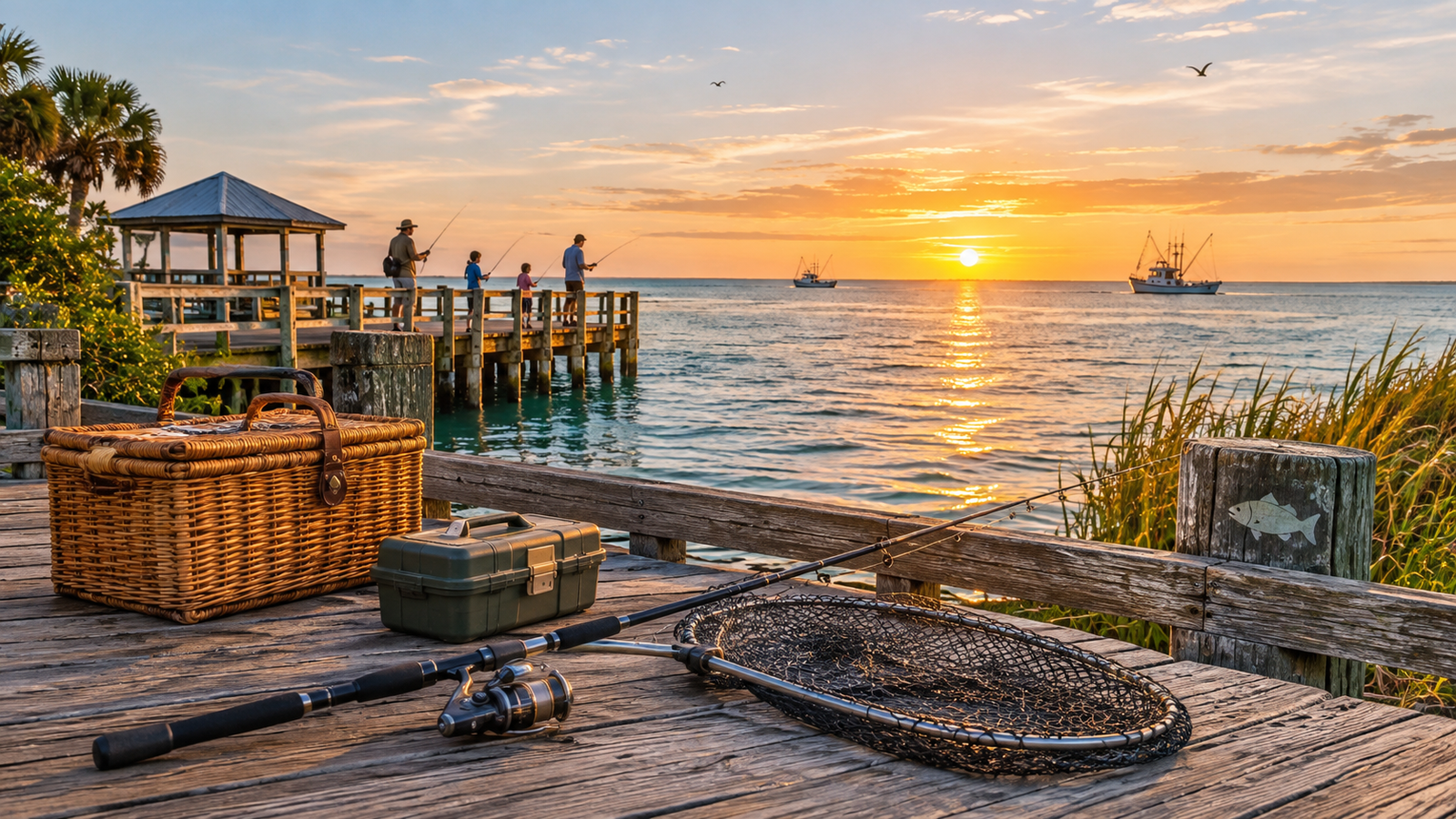
The Gulf Coast has a special appeal for families who enjoy outdoor recreation, marine environments, and memorable experiences near the water. Its beautiful shorelines, fishing opportunities, coastal communities, and diverse marine ecosystems create an inviting setting for people of different ages and experience levels. Among the search terms associated with this subject, family fish thunderonthegulf represents an interesting combination of family recreation, fishing culture, coastal exploration, and shared outdoor activities.
Fishing is much more than the act of catching fish. It encourages patience, develops practical skills, introduces children to aquatic ecosystems, and creates opportunities for families to spend meaningful time together. A morning beside a quiet fishing pier, an afternoon exploring coastal waters, or a carefully planned charter excursion can become an experience that family members remember for years.
The subject also deserves a broader perspective. A successful family fishing experience involves preparation, suitable equipment, responsible fishing practices, knowledge of local regulations, and an understanding of changing coastal conditions. These elements help transform an ordinary outing into a safe, educational, and enjoyable adventure.
This guide explores family fish thunderonthegulf through the perspective of Gulf Coast fishing culture, family recreation, practical trip planning, marine conservation, and coastal experiences. It also examines what readers should understand about the Thunderonthegulf name rather than assuming that every reference to it represents an officially organized fishing competition.
1. Understanding Family Fish Thunderonthegulf
What Does Family Fish Thunderonthegulf Mean?
The phrase family fish thunderonthegulf can be understood as a search topic connecting family-oriented fishing activities with the coastal lifestyle associated with Thunderonthegulf. It brings together several related interests: recreational angling, family bonding, marine exploration, outdoor education, and appreciation of the Gulf Coast environment.
The subject is particularly relevant to parents looking for accessible outdoor activities, fishing enthusiasts interested in introducing younger generations to angling, and travelers who want to experience coastal destinations beyond conventional sightseeing.
Thunderonthegulf also has an identifiable online presence. Its website describes a broader collection of interests centered on health, arts and crafts, fishing, and gardening. Its stated founder is Amanda Lee, while Steven Evans is identified as an author contributing content about these subjects. Thunderonthegulf+1
This distinction is important because the name should not automatically be interpreted as a formally registered fishing organization, charter operator, or annual fishing tournament. The available website information supports understanding Thunderonthegulf as a content platform with several lifestyle and recreational themes.
For readers searching for family fish thunderonthegulf, the most useful approach is therefore to explore the subject as a combination of coastal recreation and family fishing guidance.
Why Family Fishing Deserves Attention
Family fishing has a distinctive advantage over many recreational activities: it allows people to participate at different levels without requiring everyone to possess the same skills.
An experienced angler can demonstrate casting techniques, a parent can help a younger child prepare bait, and grandparents can share stories about previous fishing experiences. Even family members who do not particularly enjoy catching fish can appreciate the surrounding environment, coastal scenery, and relaxed atmosphere.
The activity also encourages a healthier relationship with nature. Children become familiar with tides, aquatic habitats, weather patterns, and the importance of protecting wildlife.
Rather than focusing exclusively on the number or size of fish caught, families can develop a broader appreciation for the entire experience.
2. Family Fish Thunderonthegulf Biography Table
The following family fish thunderonthegulf biography table is very important for readers who want a quick overview of the subject, its general identity, and the information associated with the Thunderonthegulf platform.
| Category | Information |
|---|---|
| Subject name | Family Fish Thunderonthegulf |
| Primary theme | Family fishing and coastal recreation |
| Associated platform | Thunderonthegulf |
| Website identity | Online lifestyle and informational platform |
| Main interests | Fishing, health, arts and crafts, gardening |
| Identified founder | Amanda Lee |
| Identified contributing author | Steven Evans |
| Main geographical inspiration | Gulf Coast lifestyle |
| Intended audience | Families, beginners, outdoor enthusiasts, fishing readers |
| Primary activity | Recreational family fishing |
| Educational themes | Fishing techniques, marine awareness, outdoor safety |
| Recreational themes | Coastal exploration and family activities |
| Environmental focus | Responsible fishing and respect for marine habitats |
| Experience level | Beginners through experienced recreational anglers |
| Content format | Informational articles and practical guides |
| Main objective | Sharing knowledge and encouraging enjoyable activities |
| Official fishing tournament status | Not established by the available platform information |
| Charter service status | Not established by the available platform information |
| Suitable interests | Fishing, nature, family recreation, creative hobbies |
The family fish thunderonthegulf biography table is very important because it separates identifiable platform information from the wider recreational ideas associated with the keyword.
It also prevents a common misunderstanding in online research: assuming that every website or article using a similar name represents the same company, organization, or event.
The table should be regarded as an informational overview rather than a formal corporate registration record or an independently verified organizational biography.
The Platform’s General Identity
Thunderonthegulf presents itself as a lifestyle-oriented information source. Its stated areas of interest extend beyond fishing, incorporating creative projects, personal well-being, and gardening.
This broader identity provides an interesting context for the family fishing subject. Outdoor recreation, gardening, and creative hobbies can complement one another because they encourage practical learning and greater engagement with the natural environment.
For example, a family might spend one morning fishing, use the afternoon to prepare a simple coastal-inspired craft, and dedicate another day to learning about native plants.
Such activities create a more comprehensive outdoor lifestyle rather than limiting family recreation to a single pursuit.
3. The Relationship Between Family Fishing and Gulf Coast Culture
The Gulf Coast has a longstanding connection with fishing. Coastal communities have developed traditions around commercial fisheries, recreational angling, seafood preparation, boating, waterfront tourism, and marine conservation.
Fishing is not merely a pastime in many coastal communities. It can be an important element of local identity, family history, and regional economic activity.
Fishing as a Family Tradition
Family fishing traditions often begin with simple experiences.
A parent may introduce a child to fishing from a pier. A grandparent might explain how to recognize a particular species. Older siblings may help younger family members learn to cast a line.
Over time, these experiences can become recurring traditions.
The appeal of family fish thunderonthegulf lies partly in this idea of shared participation. Fishing offers an opportunity for different generations to spend time together without the constant distractions associated with modern routines.
A family does not need an expensive offshore vessel or professional equipment to establish such a tradition. A suitable public fishing area, basic tackle, and appropriate preparation can provide a meaningful starting point.
The Gulf Coast’s Natural Diversity
The Gulf Coast contains a variety of aquatic environments, including:
- Sandy beaches and shallow coastal waters.
- Estuaries where freshwater and seawater mix.
- Salt marshes and tidal creeks.
- Bays, channels, and protected inshore areas.
- Artificial reefs and offshore structures.
- Seagrass habitats and natural coastal wetlands.
Each environment supports different forms of marine life.
These habitats also influence fishing conditions. Water depth, salinity, temperature, vegetation, tidal movement, and seasonal changes can affect where fish feed and move.
Understanding these differences helps families select appropriate fishing locations and develop realistic expectations.
The Educational Value of Coastal Exploration
Fishing creates opportunities to introduce children to environmental science in a practical setting.
Instead of learning exclusively from books, children can observe how water moves, how birds search for food, and how small marine organisms interact with larger species.
Parents can explain concepts such as:
- Food chains and marine ecosystems.
- Migration and seasonal movement.
- Tidal changes.
- Water quality.
- Habitat protection.
- Responsible wildlife observation.
These lessons can be introduced naturally during an outing without turning recreation into a formal classroom exercise.
4. Why Family Fish Thunderonthegulf Appeals to Different Generations
One of the strongest attractions of family-oriented fishing is its flexibility.
Different family members may have different expectations. Children may want excitement, adults may appreciate relaxation, and experienced anglers may enjoy improving their technique.
A thoughtfully planned outing can accommodate these interests.
Benefits for Children
Fishing can help children develop several practical and personal skills.
Patience: Waiting for a fish to approach the bait teaches children that successful results do not always happen immediately.
Observation: Watching the water, recognizing movement, and identifying wildlife encourage attention to detail.
Coordination: Holding a rod, controlling the reel, and practicing simple casting techniques improve hand-eye coordination.
Responsibility: Looking after equipment and following safety instructions help children understand their responsibilities.
Curiosity: Discovering unfamiliar fish species can encourage questions about biology, habitats, and environmental protection.
Benefits for Parents
For parents, family fishing can provide a structured opportunity to spend time with children away from digital distractions.
It also creates opportunities to teach practical skills through direct participation.
Parents can demonstrate how to prepare equipment, tie basic knots, measure a fish, and handle a catch responsibly.
The experience can be particularly rewarding when children become increasingly confident and independent.
Benefits for Grandparents
Fishing has a natural connection with storytelling and intergenerational learning.
Grandparents can share personal experiences, explain traditional techniques, and teach younger family members about the value of patience.
These conversations often become an important part of the outing.
Benefits for Beginners
People who have never fished before may initially feel uncertain about equipment, bait, casting, and local regulations.
However, beginners do not need advanced knowledge to start.
A short fishing session in an accessible location can provide an introduction without creating unnecessary pressure.
The family fish thunderonthegulf approach is most effective when participation is encouraged rather than measured through competitive performance.
5. Choosing the Right Fishing Location
Location selection is one of the most important decisions when organizing a family fishing outing.
A productive fishing location is not necessarily the best location for children. Families must consider accessibility, safety, weather exposure, available facilities, and the experience level of participants.
Fishing From a Public Pier
Fishing piers are often practical for beginners because they provide a stable platform and generally require less specialized equipment than offshore fishing.
Advantages may include:
- Relatively easy access.
- Opportunities to fish without operating a boat.
- Space for multiple family members.
- Nearby parking or public facilities at some locations.
- Opportunities to observe other anglers.
Families should nevertheless examine railings, walking surfaces, crowd levels, and local fishing restrictions before selecting a pier.
Children should remain supervised, especially near the water’s edge.
Shoreline Fishing
Shoreline fishing can be an enjoyable introduction to coastal angling.
It allows families to fish from accessible beaches or other permitted areas without arranging a boat excursion.
However, surf conditions, waves, changing tides, and slippery surfaces require attention.
Parents should choose a location with manageable water conditions and sufficient space for children to move safely.
Inshore Fishing
Inshore fishing takes place in relatively shallow coastal environments, including bays, estuaries, tidal creeks, and protected waterways.
These locations can offer interesting opportunities for families because some fishing areas are closer to marinas and launching facilities than offshore destinations.
Potential target species vary by location and season.
Redfish, spotted seatrout, sheepshead, and other coastal species may be encountered in suitable Gulf Coast waters.
Families should check current local rules before targeting or keeping any species.
Guided Fishing Trips
A guided fishing trip can be useful for families who want assistance from an experienced captain.
A suitable guide can help participants understand:
- Basic fishing equipment.
- Bait selection.
- Casting methods.
- Local fishing conditions.
- Species identification.
- Safe fish handling.
Not every charter is designed for children or inexperienced participants. Families should ask about trip duration, boat facilities, safety equipment, age recommendations, and cancellation policies before making arrangements.
Offshore Fishing
Offshore fishing can provide a different experience, but it is generally more demanding than fishing from a pier or shoreline.
Longer journeys, deeper water, changing weather, and boat movement can make it less suitable for very young children or first-time anglers.
Families should assess their experience and comfort levels carefully.
A shorter inshore trip may be a more appropriate starting point.
6. Understanding Fish Species Found Along the Gulf Coast
The Gulf of Mexico supports numerous fish species, making it an interesting environment for recreational anglers.
The species available to families depend on the location, water conditions, season, and applicable regulations.
Redfish
How to Catch Redfish, Fishing for Redfish | Sport Fishing Mag
Redfish, also known as red drum, are recognizable by their copper-colored bodies and distinctive tail markings.
They are associated with coastal environments, including bays, marshes, and shallow waters.
Redfish can provide an interesting learning opportunity because families can discuss their appearance, habitat, and role in the marine ecosystem.
Spotted Seatrout
Common Saltwater Fish in the United States: Habits, Seasons, and How t – LURE HUB
Spotted seatrout are known for their characteristic dark spots and elongated bodies.
They inhabit suitable coastal waters and are a familiar species among many Gulf Coast recreational anglers.
Their availability and harvest restrictions vary by jurisdiction.
Sheepshead
Winter Inshore Fishing Strategies (Snook, Trout, Redfish & Sheepshead)
Sheepshead have distinctive vertical dark stripes and specialized teeth adapted for feeding on hard-shelled organisms.
They are frequently associated with structures such as docks, pilings, and rocky areas.
Their unusual appearance makes them especially interesting for children learning to identify fish.
Red Snapper
Saving the Red Snapper – Earthjustice
Red snapper are among the recognizable reef-associated species found in Gulf waters.
They are particularly important in recreational fishing discussions because harvest opportunities are governed by specific regulations.
Families interested in targeting red snapper should check the applicable season, size limits, and daily harvest restrictions before planning their trip.
Spanish Mackerel
スパニッシュ・マッカレル (Scomberomorus maculatus) – Picture Fish
Spanish mackerel are fast-swimming fish found in suitable coastal and offshore environments.
Their streamlined bodies and active feeding behavior make them an interesting species for recreational anglers.
Families should always use appropriate equipment and follow safe handling practices when encountering fish with sharp teeth or spines.
7. Planning a Successful Family Fishing Trip
Good preparation makes fishing more comfortable, particularly when children are involved.
The family fish thunderonthegulf experience should be organized around realistic expectations rather than an unnecessarily complicated itinerary.
Select a Suitable Date
Weather conditions are among the most important considerations.
Families should review:
- Forecast temperatures.
- Wind speed and direction.
- Rainfall predictions.
- Thunderstorm warnings.
- Wave conditions.
- Local tide information.
Coastal weather can change rapidly. A pleasant morning forecast does not guarantee safe conditions throughout the day.
If thunderstorms, strong winds, or hazardous water conditions are expected, postponing the outing is often the sensible decision.
Choose an Appropriate Duration
A first fishing trip should generally be relatively short.
Children may become tired, hungry, or restless after several hours outdoors.
A shorter outing allows everyone to enjoy fishing without feeling committed to an exhausting schedule.
Families can gradually increase trip duration as children become more comfortable.
Prepare a Realistic Budget
Fishing does not have to be an expensive activity.
A basic budget may include:
| Expense | Purpose |
|---|---|
| Fishing rods | Basic fishing equipment |
| Reels | Line control and retrieval |
| Hooks and tackle | Fishing setup |
| Bait | Attracting target species |
| Fishing permits | Required legal authorization |
| Transportation | Reaching the location |
| Food and water | Family refreshments |
| Sun protection | Reducing exposure |
| Charter fees | Optional guided excursions |
| Emergency supplies | Basic preparedness |
The family fish thunderonthegulf approach emphasizes the value of balancing enjoyment with sensible spending.
Families can begin with essential equipment and upgrade gradually as their interest develops.
Prepare Children Before Departure
Children should understand what will happen during the outing.
Parents can explain that fishing involves waiting, following instructions, and respecting the water.
It is also useful to demonstrate how a fishing rod works before reaching the location.
Children who understand basic expectations are more likely to feel comfortable and participate confidently.
8. Essential Fishing Equipment for Families
Having suitable equipment can make a considerable difference to the quality of a fishing experience. Families do not need to purchase professional-grade equipment immediately. The best approach is to choose simple, dependable items that match the intended fishing environment.
Fishing Rods and Reels
A lightweight spinning rod is often a practical choice for beginners.
It is relatively straightforward to operate and can be used for a range of recreational fishing situations.
When selecting rods for children, consider:
- Overall length and weight.
- Comfortable grip.
- Ease of handling.
- Reel simplicity.
- Durability.
- Suitability for the target species.
Children should be able to hold and control their equipment without excessive physical effort.
Fishing Line
Fishing line connects the angler to the hook and plays an important role in controlling a catch.
Different line materials have different characteristics.
Monofilament is commonly used by beginners because it is relatively manageable and generally affordable. Braided line offers greater sensitivity and strength for its diameter, although it may require additional knowledge when tying knots and selecting leaders.
The appropriate line depends on the target species, fishing environment, and equipment.
Hooks and Basic Tackle
Hooks, sinkers, swivels, and floats are common components of recreational fishing equipment.
Beginners should use simple, suitable rigs rather than attempting complicated setups.
Parents should keep sharp hooks securely stored when children are nearby. Children should never be allowed to handle exposed hooks without appropriate supervision.
Bait Selection
Bait selection depends on the fish species and local conditions.
Common saltwater bait options include:
- Shrimp.
- Squid.
- Small baitfish.
- Cut bait.
- Artificial soft plastics.
- Spoons and other fishing lures.
Families should ask local fishing shops or licensed guides about suitable bait for their intended location.
Live bait should be handled responsibly, and unused bait should not be released into unfamiliar environments.
Additional Essentials
A practical family fishing kit should include:
- Measuring device.
- Pliers suitable for fishing.
- Small tackle organizer.
- Water-resistant storage bag.
- Polarized sunglasses.
- Sun hats.
- Appropriate footwear.
- Drinking water.
- First-aid supplies.
- Waterproof phone protection.
The objective is not to carry every possible accessory. It is to have the equipment required for a comfortable and responsible outing.
9. Teaching Children Basic Fishing Techniques
One of the most valuable aspects of family fishing is the opportunity to introduce children to practical skills.
The process should be gradual, encouraging, and appropriate for the child’s age.
Learning How to Hold a Fishing Rod
Children should first learn how to hold a rod comfortably.
Parents can demonstrate the correct grip and explain how to maintain control during casting.
Before practicing near water, children should understand the importance of keeping a safe distance from other people.
Practicing Casting
Casting is one of the first skills that beginners usually want to learn.
An open area without nearby people, overhead obstacles, or hazards is suitable for initial practice.
Parents can begin with a simple demonstration and allow children to repeat the movement slowly.
The objective should be controlled technique rather than maximum casting distance.
Understanding Basic Knots
Fishing knots provide a useful introduction to practical problem-solving.
Simple knots can help children understand how different pieces of equipment connect.
Parents should demonstrate each step clearly and allow children to practice using larger practice materials before handling small fishing line.
Recognizing a Bite
Children often become excited when they notice movement in the fishing line.
Parents can explain how to recognize a bite and when to respond.
This is also an opportunity to teach patience. Not every movement means that a fish has taken the bait.
Learning Fish Identification
Fish identification adds an educational dimension to the experience.
Children can observe:
- Body shape.
- Color patterns.
- Fin structure.
- Distinctive markings.
- Approximate size.
- Habitat.
A simple identification notebook can make the activity even more engaging.
Families can record the species they observe, the location, and interesting details about each encounter.
10. Keeping Children Entertained Throughout the Trip
A successful family outing should not depend entirely on fishing activity.
Children have different attention spans, and even enthusiastic young anglers may need occasional breaks.
The best strategy is to introduce variety.
Create Small Fishing Challenges
Instead of making the number of fish caught the main objective, parents can create simple challenges.
For example:
- Identify three different fish species.
- Learn one new fishing knot.
- Practice casting accurately.
- Observe two different coastal birds.
- Recognize changes in the tide.
- Record an interesting marine discovery.
These activities provide achievable goals and keep children involved.
Introduce Nature Photography
Photography offers an enjoyable alternative when fishing becomes quiet.
Children can photograph coastal scenery, boats, birds, plants, and interesting natural patterns.
Parents can encourage them to create a small photo journal documenting the day.
Organize Coastal Crafts
Creative activities can complement the fishing experience.
Families might create:
- Marine-life drawings.
- Fish-shaped paper decorations.
- Coastal-themed picture frames.
- Recycled-material fishing models.
- Illustrated species identification cards.
- Nature-inspired scrapbooks.
These activities also connect with the arts and crafts interests featured by Thunderonthegulf.
Plan Regular Breaks
Short breaks help prevent exhaustion and frustration.
Families should schedule time for refreshments, shade, relaxation, and movement.
A comfortable child is generally more likely to remain interested in the experience.
11. Safety Considerations for Family Fish Thunderonthegulf
Safety should be the foundation of every fishing outing.
Water environments contain hazards that may not be immediately obvious. Changing weather, slippery surfaces, sharp equipment, strong currents, and boat movement all require attention.
The family fish thunderonthegulf experience should always place personal safety ahead of catching fish.
Life Jackets and Personal Flotation Devices
When fishing from a boat, children should have properly fitted, appropriately approved personal flotation devices.
A life jacket should match the child’s size and weight.
It should be worn correctly rather than simply kept somewhere on the boat.
Parents should check that straps and closures are secure before departure.
Sun Protection
The Gulf Coast can experience substantial sun exposure.
Families should prepare with:
- Broad-spectrum sunscreen.
- Protective clothing.
- Wide-brimmed hats.
- Sunglasses.
- Shaded rest areas.
- Regular water breaks.
Sunscreen should be reapplied according to its instructions, particularly after swimming or excessive sweating.
Hydration and Heat Awareness
Hot weather can make outdoor activities physically demanding.
Children may not always recognize early signs of dehydration or overheating.
Parents should encourage regular drinking and monitor everyone for unusual fatigue, dizziness, headaches, nausea, or excessive discomfort.
If someone appears unwell, the activity should stop while appropriate assistance is sought.
Safe Handling of Fishing Equipment
Hooks, knives, pliers, and other fishing tools can cause injuries.
Children should be taught that these objects are not toys.
A designated adult should manage sharp tools and assist with removing hooks from fish.
Equipment should remain organized rather than scattered across walking areas.
Boat Safety
Before boarding a fishing vessel, families should understand basic safety procedures.
They should identify the location of flotation equipment, communication devices, first-aid supplies, and emergency exits where applicable.
Children should remain seated when instructed and avoid moving around while the vessel is underway.
The captain’s safety instructions should always take priority.
Weather and Water Conditions
Thunderstorms are particularly important to consider during Gulf Coast outings.
Lightning can create life-threatening conditions in exposed waterfront environments.
Families should monitor weather warnings and follow appropriate evacuation or shelter instructions.
A fishing trip should never continue simply because equipment has already been prepared or money has been spent.
12. Responsible Fishing and Marine Conservation
Responsible fishing is an essential part of enjoying coastal environments.
The Gulf of Mexico contains complex marine ecosystems that support numerous species and provide important environmental and economic benefits.
Recreational anglers can contribute to conservation through thoughtful decisions.
Respecting Size and Catch Limits
Fishing regulations may establish minimum or maximum sizes, seasonal closures, and daily harvest limits.
These rules are intended to support sustainable fish populations.
Families should identify the rules applicable to their fishing location before keeping a catch.
The Florida Fish and Wildlife Conservation Commission, for example, maintains species-specific saltwater regulations covering numerous recreationally targeted fish. FWC+1
Practicing Catch and Release
Catch and release can be an educational part of family fishing.
It allows anglers to experience the activity while returning suitable fish to the water.
However, releasing a fish does not automatically eliminate the possibility of injury.
Good handling practices include:
- Wetting hands before touching a fish.
- Avoiding unnecessary handling.
- Supporting the fish properly.
- Keeping it out of the water for as little time as possible.
- Using appropriate hook-removal tools.
- Following species-specific release recommendations.
Some fish are particularly sensitive to handling, temperature changes, or prolonged air exposure.
Protecting Coastal Habitats
Families should avoid disturbing seagrass beds, marsh vegetation, nesting areas, and other sensitive environments.
Anchoring and walking should be restricted to suitable areas.
Children can learn that natural habitats provide shelter, feeding grounds, and breeding environments for marine organisms.
Preventing Pollution
Plastic packaging, discarded fishing line, and food waste can harm wildlife.
Every family should carry a suitable waste bag and remove all rubbish before leaving.
Discarded fishing line deserves particular attention because it can entangle birds, fish, and other animals.
Understanding Sustainable Seafood
If a family decides to keep fish for consumption, it should follow legal limits and use appropriate storage practices.
Seafood should be handled hygienically and kept at safe temperatures.
Responsible harvesting also involves avoiding unnecessary waste and taking only what can be legally and reasonably used.
13. Understanding Fishing Licenses and Local Regulations
Fishing rules are not identical throughout the Gulf Coast.
Requirements can differ between Florida, Alabama, Mississippi, Louisiana, and Texas. They may also change according to the fishing location, target species, fishing method, and type of vessel.
This is particularly important for families traveling between coastal states.
Florida Saltwater Fishing Requirements
Florida generally requires appropriate recreational fishing authorization for people attempting to catch saltwater fish unless a specific exemption applies.
The Florida Fish and Wildlife Conservation Commission explains that license requirements apply to fishing attempts, including catch-and-release fishing. It also identifies exemptions for certain fishing situations, including some properly licensed charter vessels and piers. FWC+1
Species-Specific Regulations
Some species require additional permits or designations.
Size restrictions, seasonal closures, and daily bag limits can also vary.
For this reason, families should not rely on old fishing charts, outdated blog articles, or information remembered from a previous vacation.
Rules for Charter Fishing
A charter operator may hold specific licenses that affect the requirements for passengers.
However, families should confirm the arrangements directly with the operator rather than assuming that every trip automatically covers every participant.
Why Regulatory Awareness Matters
Following fishing regulations protects marine resources and reduces the risk of legal problems.
It also teaches children that responsible outdoor recreation involves understanding and respecting shared rules.
The family fish thunderonthegulf philosophy is more meaningful when enjoyment is combined with environmental responsibility and legal awareness.
14. Best Times of Year for Gulf Coast Family Fishing
The best time for fishing depends on several factors, including local water temperatures, weather conditions, species movement, and seasonal regulations.
There is no universal fishing calendar that applies equally to every Gulf Coast location.
Spring Fishing
Spring can offer pleasant conditions as temperatures gradually rise.
Many families appreciate the moderate weather, although wind and rainfall can still influence fishing opportunities.
Spring is also a suitable time for introducing children to outdoor activities before the hottest summer conditions arrive.
Summer Fishing
Summer provides longer daylight hours and plenty of opportunities for coastal recreation.
However, high temperatures, humidity, and afternoon thunderstorms require careful planning.
Early morning outings can be more comfortable than midday sessions.
Families should pay particular attention to hydration and shade.
Autumn Fishing
Autumn can offer comfortable outdoor conditions in many Gulf Coast areas.
As temperatures become more moderate, families may find it easier to spend longer periods outdoors.
Fishing opportunities still depend on location, seasonal species behavior, and applicable regulations.
Winter Fishing
Winter fishing can provide quieter coastal experiences.
Some locations remain productive throughout the colder months, while other species become less active or move into different habitats.
Families should prepare suitable clothing and check weather conditions before departure.
Selecting the Right Season
The ideal time is the period that best matches the family’s priorities.
For young children, comfort and safe weather conditions may be more important than pursuing a particular species.
For experienced anglers, seasonal fishing patterns may play a larger role.
15. How to Select a Family-Friendly Fishing Charter
A fishing charter can make a family trip easier by providing equipment, local knowledge, and guidance.
However, choosing an appropriate operator requires more than comparing prices.
Check the Captain’s Experience
Families should ask about the captain’s experience with beginners and children.
A guide who regularly works with experienced anglers may not necessarily provide the same experience as someone accustomed to family groups.
Ask About Boat Facilities
Important considerations include:
- Passenger capacity.
- Available seating.
- Shade protection.
- Restroom facilities.
- Safety equipment.
- Boarding arrangements.
- Accessibility.
- Emergency communication.
These details can influence the comfort of the entire group.
Compare Trip Lengths
Half-day excursions are often a practical starting point for families.
Longer trips may provide additional fishing opportunities but can also create greater fatigue.
Parents should select a duration that reflects the age and comfort of the youngest participant.
Understand the Pricing Structure
Charter prices may include different services.
Families should clarify whether the quoted amount covers fishing equipment, bait, licenses, fuel, cleaning services, and other possible expenses.
They should also ask about cancellation arrangements when weather conditions become unsuitable.
Read Reviews Carefully
Recent customer reviews can help families understand an operator’s communication, professionalism, and overall service quality.
However, reviews should be evaluated critically.
Specific comments about child safety, boat cleanliness, patience, and trip organization are generally more useful than vague praise.
16. Family-Friendly Food and Seafood Experiences
Food is another enjoyable part of coastal recreation.
For many families, a fishing trip becomes an opportunity to explore regional seafood traditions and learn more about how coastal communities prepare local ingredients.
Discovering Gulf Coast Seafood
The Gulf Coast is associated with a variety of seafood dishes, including grilled fish, shrimp, crab, oysters, and regional seafood combinations.
Families can explore these foods at suitable restaurants or prepare a meal at home using legally harvested seafood.
Children may enjoy learning about the connection between fish species, local fishing practices, and regional food traditions.
Preparing a Family Seafood Meal
A simple seafood meal can become an educational activity.
Parents can explain basic food preparation, kitchen hygiene, and the importance of keeping seafood properly refrigerated.
A family meal might include grilled fish, vegetables, rice, and a light salad.
The objective is to celebrate the experience rather than make the meal unnecessarily complicated.
Supporting Local Coastal Businesses
Local seafood markets, restaurants, fishing supply stores, and small businesses contribute to the character of coastal communities.
Families can learn about regional food culture by exploring these businesses and understanding their connection to the surrounding environment.
17. Photography and Memory-Making During Fishing Trips
Family fish thunderonthegulf is not only about fishing techniques or equipment. It also represents the value of preserving meaningful outdoor experiences.
Photography is one way to document these occasions.
Capturing the Coastal Environment
Families can photograph the natural surroundings, including:
- Sunrise over the water.
- Fishing boats near the shoreline.
- Coastal birds.
- Waves and tidal patterns.
- Fishing equipment.
- Interesting fish species.
- Family members participating in activities.
Photographs should be taken without compromising safety or disturbing wildlife.
Creating a Fishing Journal
A fishing journal provides a practical way to record experiences.
Children can write down:
- The date of the outing.
- The fishing location.
- Weather conditions.
- Species observed.
- Equipment used.
- Skills learned.
- Favorite moments.
Over time, these notes create a personal record of family activities.
Developing a Family Fishing Tradition
A recurring fishing day can become a meaningful family tradition.
Some families may choose a particular weekend each year, while others may organize occasional trips during school holidays.
The most important element is consistency rather than frequency.
A modest outing that everyone enjoys can be more valuable than an expensive trip that creates unnecessary stress.
18. The Role of Digital Information in Modern Fishing
Digital resources have changed the way people prepare for outdoor activities.
Weather applications, tide information, maps, educational websites, and fishing reports allow families to research conditions before leaving home.
The Thunderonthegulf platform fits into this wider environment of online recreational information.
Learning Through Online Guides
Informational articles can help beginners understand fishing terminology, basic equipment, and common techniques.
They can also introduce readers to topics such as coastal conservation, outdoor preparation, and family activities.
Nevertheless, online guides should complement rather than replace official regulations and professional safety advice.
Checking Weather and Tides
Digital forecasts can help families identify suitable fishing windows.
However, weather information should be checked using reliable sources and updated close to departure.
Tidal information is particularly useful in many coastal fishing environments because water movement can influence feeding activity and accessibility.
Using Digital Maps Responsibly
Maps can help families identify public access points, marinas, piers, and permitted recreational areas.
Before visiting a location, readers should verify access restrictions, parking arrangements, and local safety conditions.
A location appearing on a digital map is not automatically a public fishing area.
Evaluating Online Fishing Advice
Not every fishing article provides equally reliable information.
Readers should look for:
- Clearly explained recommendations.
- Accurate species identification.
- Appropriate safety guidance.
- Current regulatory information.
- Realistic descriptions of fishing conditions.
- Transparent identification of opinions and factual claims.
These principles are particularly important when searching for family fish thunderonthegulf and related fishing information.
19. Understanding Thunderonthegulf as an Online Platform
Thunderonthegulf has an identifiable website presence with content covering several lifestyle and recreational subjects.
Its published About Us information identifies Amanda Lee as the founder and Steven Evans as an author. The platform describes its main interests as health, arts and crafts, fishing, and garden-related content. Thunderonthegulf
This wider editorial direction provides context for understanding the family fishing topic.
A Multi-Interest Content Approach
Some online publishing platforms focus exclusively on one subject.
Others bring together related lifestyle interests to appeal to a broader readership.
Thunderonthegulf follows the latter general approach through its combination of outdoor recreation, creative hobbies, gardening, and health-related themes.
This structure can be useful for families because these subjects often overlap in everyday life.
For example, a fishing outing can inspire a nature journal, a coastal craft project, or a discussion about healthy outdoor habits.
Fishing Information for Different Experience Levels
Fishing content can serve several types of readers.
Beginners may need introductory explanations, while experienced anglers may be more interested in specific techniques or seasonal considerations.
Family-oriented articles occupy an important position between these audiences.
They can make fishing more accessible by explaining basic concepts without assuming extensive technical knowledge.
The Importance of Practical Content
Readers generally benefit most from information they can apply.
A useful family fishing article should explain what equipment is needed, how to prepare children, which safety precautions matter, and how to select an appropriate fishing environment.
Broad descriptions of coastal beauty are valuable, but practical advice makes informational content more useful.
Identifying Editorial Limitations
Readers should distinguish between general fishing guidance, personal recommendations, official regulatory information, and verified business details.
A website publishing fishing articles should not automatically be treated as a licensed charter company, tournament organizer, or government authority.
This distinction helps maintain a realistic understanding of family fish thunderonthegulf and the wider Thunderonthegulf identity.
20. Thunder on the Gulf and the Meaning of Its Name
An additional distinction is useful for readers researching this keyword.
The expression Thunder on the Gulf may also be associated with offshore powerboat racing and waterfront entertainment in the Gulf Coast region.
This is different from ordinary family fishing.
The words may appear together in online searches, but that does not mean a fishing outing, a family fishing guide, and an offshore racing event are the same activity.
Readers should examine the actual subject of a page before assuming that it describes an official event or organized fishing competition.
In particular, information about dates, tickets, registrations, charter packages, tournament participation, or official event schedules should be checked independently.
The family fish thunderonthegulf topic is best understood as family-oriented fishing and coastal recreation unless a specific event or organization is separately established.
21. Common Challenges During Family Fishing Trips
Even a well-planned fishing outing can present unexpected difficulties.
Understanding these challenges beforehand helps parents respond calmly and make better decisions.
Children Losing Interest
Children may become bored when fish are not biting.
The solution is to include alternative activities, provide breaks, and avoid setting unrealistic expectations.
Parents should remember that an enjoyable day does not require a successful catch.
Uncomfortable Weather
Heat, wind, rain, and humidity can affect the experience.
Families should prepare appropriate clothing and remain willing to change their plans.
Safety should always take priority over the original schedule.
Equipment Problems
Fishing line can become tangled, hooks may be lost, and reels may stop working properly.
Carrying a small selection of replacement tackle and basic repair items can prevent minor equipment problems from interrupting the entire outing.
Motion Sickness
Some children and adults experience discomfort on boats.
Families should discuss motion sickness with an appropriate healthcare professional when necessary and ask the charter operator about expected sea conditions.
A calm inshore trip may be more suitable for individuals who are unfamiliar with boating.
Unexpected Expenses
Additional costs can arise through parking, bait, equipment replacement, permits, food, or charter arrangements.
Preparing a realistic budget and confirming included services can reduce unpleasant surprises.
22. Making Family Fish Thunderonthegulf More Educational
Fishing can become a valuable learning experience when parents introduce educational activities naturally.
Children do not need formal lessons to develop an understanding of coastal environments.
Marine Biology
Parents can explain the basic characteristics of fish, including their gills, fins, scales, and movement patterns.
They can also introduce the concept of food chains and explain how different organisms depend on one another.
Environmental Geography
Coastal fishing provides an opportunity to discuss beaches, estuaries, wetlands, bays, and offshore environments.
Children can learn how these landscapes differ and why certain species prefer particular habitats.
Mathematics in Fishing
Fishing includes several practical mathematical concepts.
Children can:
- Measure fish.
- Compare lengths.
- Count catches.
- Estimate distances.
- Record fishing times.
- Organize simple observations in tables.
These activities make mathematics more engaging by connecting it with real-world experiences.
Writing and Communication
A fishing journal encourages children to describe what they observed.
They can write short paragraphs, create illustrated records, and explain their favorite experiences.
This helps develop vocabulary, observation, and communication skills.
Environmental Responsibility
Parents can explain why litter should be removed, why restricted species should not be harvested, and why wildlife should be treated carefully.
These lessons can influence children’s attitudes toward nature long after the fishing trip has ended.
23. A Practical Family Fishing Itinerary
A flexible itinerary can help families organize their time without making the outing feel overly structured.
The following example is intended as a general planning model rather than a schedule for a specific Thunderonthegulf event.
| Time | Activity | Purpose |
|---|---|---|
| 6:30 AM | Breakfast and preparation | Start the day comfortably |
| 7:15 AM | Travel to fishing location | Allow time for arrival |
| 7:45 AM | Safety briefing | Explain essential precautions |
| 8:00 AM | Basic fishing session | Practice casting and observation |
| 9:00 AM | Refreshment break | Rest and hydrate |
| 9:30 AM | Continue fishing | Apply newly learned skills |
| 10:30 AM | Nature exploration | Observe birds and marine habitats |
| 11:00 AM | Pack equipment | Leave the location clean |
| 11:30 AM | Family lunch | Enjoy time together |
| 12:30 PM | Photography and relaxation | Preserve memories |
| 1:00 PM | Return home | Complete the outing |
The itinerary can be adjusted according to weather, children’s ages, transportation, and fishing location.
For a boat excursion, the schedule should follow the captain’s instructions and the agreed departure arrangements.
24. Frequently Asked Questions About Family Fish Thunderonthegulf
1. What is family fish thunderonthegulf?
Family fish thunderonthegulf is a search topic associated with family-oriented fishing, Gulf Coast recreation, outdoor learning, and coastal experiences. It connects the idea of recreational fishing with the broader Thunderonthegulf online content identity.
2. Is Thunderonthegulf an official fishing organization?
The available About Us information identifies Thunderonthegulf as an online platform covering health, arts and crafts, fishing, and gardening. It does not establish that the platform is a licensed fishing organization or tournament operator. Thunderonthegulf
3. Who founded Thunderonthegulf?
The platform’s published About Us information identifies Amanda Lee as its founder. Steven Evans is also identified as an author contributing to its content. Thunderonthegulf
4. Is family fishing suitable for young children?
Yes. Fishing can be suitable for children when the location, equipment, trip duration, and safety arrangements are appropriate for their age and abilities.
Short sessions in accessible locations are often a good starting point.
5. What equipment does a family need for fishing?
A basic family fishing kit may include lightweight rods, reels, suitable fishing line, hooks, bait, tackle organizers, sunscreen, hats, drinking water, and a first-aid kit.
The exact equipment depends on the intended location and target species.
6. What fish can families encounter in Gulf Coast waters?
Depending on the location and season, recreational anglers may encounter redfish, spotted seatrout, sheepshead, red snapper, Spanish mackerel, and other species.
Not every species is available in every area, and fishing regulations must be checked before harvesting fish.
7. Do children need fishing licenses?
Licensing requirements depend on the state, age, fishing method, and location.
For example, Florida has specific recreational fishing requirements and exemptions. Families should check current state regulations before fishing. FWC+1
8. Is a fishing charter necessary for a family trip?
No. Families can enjoy fishing from suitable public piers or permitted shorelines.
A charter is an optional arrangement that can provide equipment, guidance, and access to additional fishing environments.
9. What is the best time for family fishing?
Early mornings and late afternoons can be comfortable options, particularly during warmer months.
However, weather, tides, seasonal fishing patterns, and local regulations should determine the final schedule.
10. How can parents keep children interested in fishing?
Parents can introduce simple casting challenges, fish identification activities, photography, nature observation, and short breaks.
Keeping the experience flexible is often more effective than expecting children to fish continuously.
11. Is offshore fishing appropriate for beginners?
Offshore fishing may be appropriate for some beginners when conditions and arrangements are suitable.
However, families with young children or no boating experience may prefer a shorter inshore excursion or an accessible fishing pier.
12. How can families protect marine environments?
Families should follow fishing regulations, avoid disturbing sensitive habitats, remove rubbish, handle fish carefully, and release unsuitable catches responsibly.
13. What should families bring on a fishing boat?
Useful supplies include properly fitted flotation devices, drinking water, sun protection, suitable footwear, a first-aid kit, necessary medication, and waterproof storage for personal belongings.
Families should also confirm which supplies are provided by the charter operator.
14. Can family fishing be educational?
Yes. It can introduce children to marine biology, environmental geography, mathematics, observation, and practical problem-solving.
15. Is Thunder on the Gulf the same as family fishing?
Not necessarily. The name Thunder on the Gulf can also refer to offshore powerboat racing and related waterfront activities. Family fishing is a separate recreational subject, and the two should not be treated as interchangeable without evidence of a specific connection.
16. How can beginners identify fish?
Beginners can study body shape, color patterns, markings, fins, and habitat.
A reliable fish identification guide can help distinguish similar-looking species.
17. Is family fishing an expensive activity?
Not always. Shoreline and pier fishing can be relatively affordable when families already have basic equipment.
Charter trips and offshore excursions generally involve additional costs.
18. What makes family fish thunderonthegulf interesting?
The subject brings together coastal recreation, fishing education, outdoor family activities, and the wider lifestyle interests associated with Thunderonthegulf. It is relevant to readers who want practical ideas for spending quality time outdoors.
19. Can families combine fishing with other outdoor activities?
Yes. Fishing can be combined with nature photography, coastal walks, bird observation, picnics, gardening activities, and creative projects.
20. What is the most important consideration for a family fishing trip?
Safety and preparation are the most important considerations. Choosing an appropriate location, checking weather conditions, understanding regulations, and ensuring that children are properly supervised help create a positive experience.
25. The Future of Family Fishing and Coastal Recreation
Family fishing continues to offer opportunities for meaningful outdoor experiences in an increasingly digital world.
As families become more interested in activities that combine recreation, education, and environmental awareness, coastal fishing can remain an attractive option for different generations.
Growing Interest in Outdoor Learning
Parents are increasingly interested in experiences that allow children to learn through direct observation and participation.
Fishing offers an opportunity to explore science, geography, wildlife, and environmental responsibility in a natural setting.
These experiences can complement formal education while encouraging curiosity.
Responsible Tourism
Coastal tourism depends partly on the health and attractiveness of natural environments.
Visitors can contribute positively by supporting responsible businesses, respecting public spaces, and avoiding activities that damage marine habitats.
Family-friendly recreational experiences can also encourage younger generations to appreciate coastal destinations.
Digital Resources and Community Knowledge
Online publishing platforms can make practical information easier to discover.
Fishing guides, educational articles, equipment explanations, and conservation discussions can help beginners prepare more effectively.
Thunderonthegulf’s combination of fishing, gardening, health, and creative interests provides a broader lifestyle context for these discussions.
The future value of family fish thunderonthegulf will depend on the usefulness, accuracy, and practical relevance of information associated with the subject.
26. Building a Lasting Connection With the Gulf Coast
The most meaningful fishing experiences are not necessarily defined by impressive catches, expensive boats, or elaborate arrangements.
They are often built through small moments: a child learning to cast independently, a parent explaining how tides work, grandparents sharing memories, or family members watching the sunlight move across the water.
These experiences create a connection between recreation and appreciation for the natural environment.
For readers exploring family fish thunderonthegulf, the central opportunity is to approach coastal fishing as a shared experience rather than simply a recreational challenge.
A thoughtful family outing can combine practical preparation, outdoor education, responsible fishing, and genuine enjoyment. It can also encourage children to develop a lasting interest in marine environments and conservation.
The broader Thunderonthegulf subject offers an interesting starting point for exploring these interests, particularly when readers distinguish verified platform information from general fishing advice and assumptions about organized events.
Ultimately, a successful family fishing tradition is built through participation, curiosity, preparation, and respect for the water. These qualities give coastal recreation its lasting appeal and provide families with reasons to return to the shoreline again and agaim

1 Comment
Pingback: Fishing Family ThunderOnTheGulf: A Complete Guide to Gulf Coast Adventures, Family Traditions, and Fishing Experiences - Lyncconfs