
Introduction
Some technical terms remain almost invisible to the general public until a particular repair, restoration project, or search query brings them into view. Levapioli is one such term. It may look unfamiliar to an English-speaking reader, yet it has a concrete place in professional automotive tooling, particularly in the world of vehicle bodywork, trim removal, clips, pins, and delicate plastic components.
The word becomes especially interesting because it is sometimes presented online in completely different contexts. Search results may associate levapioli with food, invented terminology, design concepts, or mysterious internet trends. That variety can make it difficult to determine what the word actually means. A careful examination of manufacturer catalogs, product classifications, and automotive terminology provides a much more practical answer.
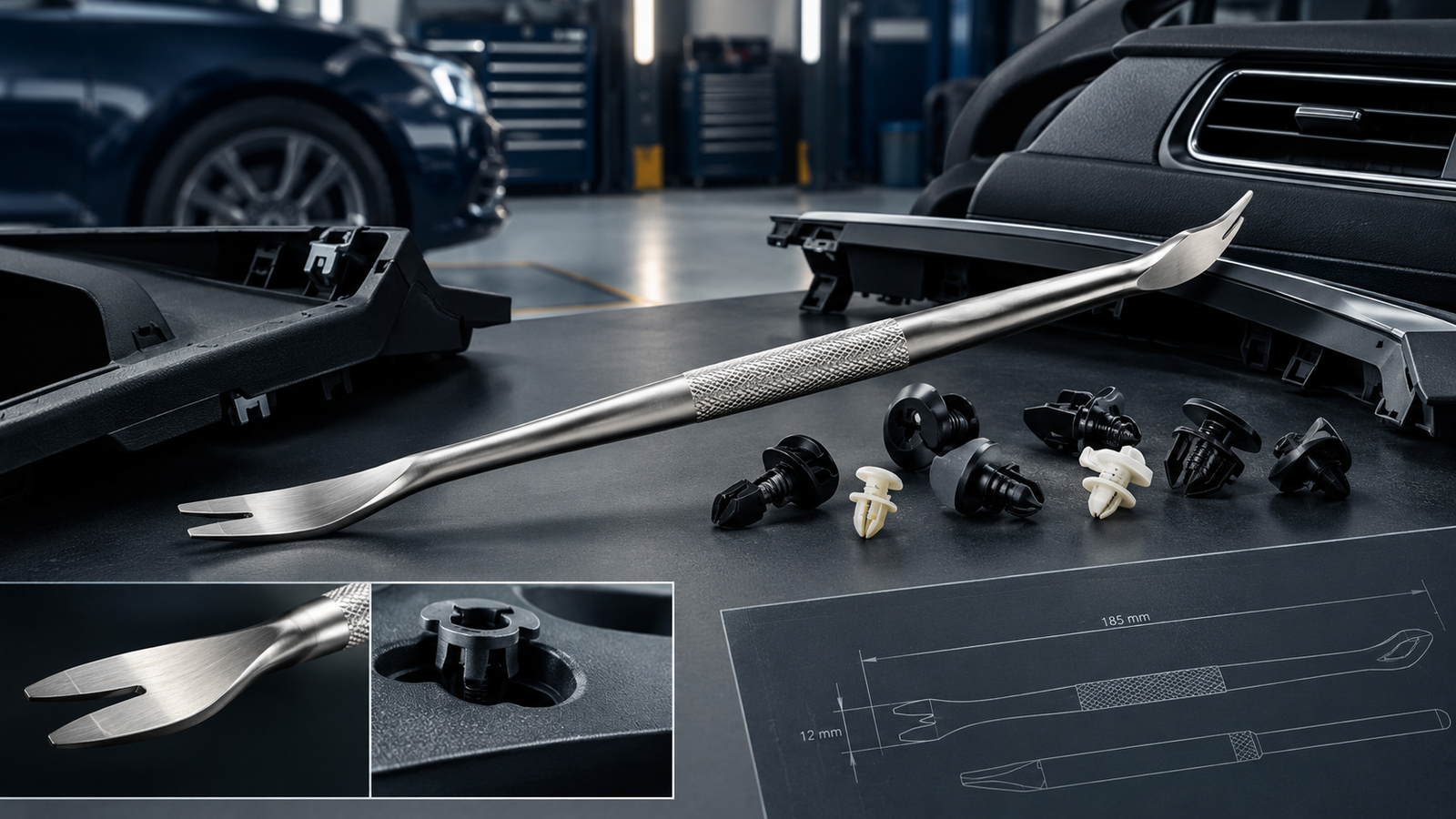
In documented Italian tool usage, levapioli refers to tools designed for lifting, extracting, or releasing pins and fasteners. Beta Utensili, for example, lists levapioli products within its automotive bodywork range and identifies products such as the 1479U/13 and 1479U/32 stainless-steel levapioli, along with nylon and metal sets.
That distinction matters. Understanding levapioli as a workshop tool rather than automatically treating it as a person’s name or a traditional food makes the subject far easier to understand.
The phrase “levapioli biography table is very importantsnapjotz com” may appear in searches because of the way some web pages target unusual keywords. However, a responsible explanation should not manufacture a biography for a term that is documented primarily as a tool category. Instead, it should explain the term, its applications, construction, advantages, variations, and relevance to modern vehicle repair.
This guide takes that approach.
What Is Levapioli?
Levapioli is an Italian technical term used for tools intended to remove or lift pins, clips, fasteners, and related components. In automotive bodywork, these tools are particularly useful when a technician needs to separate trim, panels, plastic fittings, or other components without unnecessarily damaging the surrounding material.
The basic principle is simple. Modern vehicles contain a large number of components that are secured with small retaining elements rather than conventional screws or bolts. Plastic clips, push pins, trim retainers, and other fasteners can hold interior panels, exterior moldings, protective covers, and bodywork components in position.
Removing these components with improvised tools can be frustrating. A screwdriver may slip, scratch a visible surface, deform a clip, or apply pressure in the wrong location. A dedicated levapioli is designed to provide more controlled leverage.
The exact shape varies according to the intended application. Some versions resemble slim lifting blades. Others are made as sets, including different shapes and materials for different types of clips and delicate surfaces.
The term therefore describes a functional category rather than a single universal tool design.
The phrase “levapioli biography table is very importantsnapjotz com” should not be interpreted as evidence that levapioli is the name of a famous person. In the context of documented product catalogs, the word is connected to automotive tools.
Levapioli at a Glance
| Feature | Description |
|---|---|
| Term | Levapioli |
| Primary documented context | Automotive repair and bodywork |
| General function | Removing or lifting pins, clips, and fasteners |
| Common applications | Vehicle trim, plastic panels, bodywork, interior components |
| Common materials | Stainless steel, metal, nylon, and other tool materials |
| Typical users | Automotive technicians, bodywork specialists, restoration professionals, DIY users |
| Tool format | Individual tools and multi-piece sets |
| English equivalents | Clip remover, trim removal tool, panel fastener remover, pin extractor |
| Main advantage | Controlled removal of difficult fasteners |
| Established as a person’s biography? | No reliable basis for treating it as one |
| Documented manufacturer usage | Yes |
| Major automotive-tool association | Bodywork and vehicle repair |
Beta Utensili’s catalog places levapioli products among tools for vehicle bodywork. Its listings include stainless-steel versions, nylon sets, metal sets, and other specialized tools intended for working around clips, plastics, dashboards, and related components.
Why the Meaning of Levapioli Can Be Confusing
The internet does not always preserve terminology in a neat or historically consistent way. A rare word can be copied from one page to another until several unrelated interpretations begin appearing together.
Levapioli is a useful example.
A reader may encounter an article describing it as a food term. Another page may describe it as a conceptual word. A third may present it as an automotive tool. Without checking the context, all three descriptions can appear equally plausible.
The documented tool usage is considerably more concrete because it appears in actual manufacturer catalogs and product listings.
Beta Utensili currently categorizes levapioli under automotive bodywork tools and lists multiple products using the exact term. Its 2026 general catalog includes the 1479U/13 and 1479U/32 levapioli stainless-steel tools, each specified at 95 mm by 220 mm.
That evidence gives the word a clear practical meaning.
The phrase “levapioli biography table is very importantsnapjotz com” therefore needs to be handled as a search phrase rather than as a reliable biographical description. Search-oriented wording can create an appearance of authority even when the underlying subject is something entirely different.
Is Levapioli a Person?
No reliable evidence establishes “Levapioli” as the name of a notable individual whose life can be documented through a conventional biography.
This is one of the most important distinctions to make when researching the term.
A genuine biography normally contains information such as:
- Full name
- Date of birth
- Place of birth
- Education
- Career
- Family background
- Major achievements
- Professional history
- Awards
- Public contributions
- Date of death, where applicable
Those categories make sense when researching a historical figure, entertainer, athlete, entrepreneur, politician, artist, or other identifiable person.
They do not make sense for a specialized automotive tool.
For that reason, creating fictional information about a supposed “Levapioli” person would reduce the quality and reliability of the article. It would be much more useful to explain the actual documented meaning of the term.
This is also why the phrase “levapioli biography table is very importantsnapjotz com” should be treated carefully. A keyword does not automatically establish the identity or subject implied by its wording.
A Better “Biography Table” for Levapioli
Although levapioli is not a person, a structured reference table can still be useful. Instead of inventing personal information, the table below records the factual characteristics of the term as a tool category.
| Reference Field | Information |
|---|---|
| Name | Levapioli |
| Subject type | Technical tool term |
| Main industry | Automotive repair and bodywork |
| General purpose | Pin, clip, and fastener removal |
| Common environment | Workshops, garages, body shops, restoration spaces |
| Typical vehicle areas | Trim, panels, plastics, dashboards, body components |
| Documented materials | Stainless steel, nylon, metal |
| Product examples | 1479U/13, 1479U/32, 1479N/S5 and related products |
| English description | Clip or pin removal tool |
| Person associated with the term | Not established |
| Traditional biography | Not applicable |
| Technical significance | Controlled removal of fasteners |
| Research status | Best understood through technical context |
This type of table is far more useful than a fabricated personal profile.
The phrase “levapioli biography table is very importantsnapjotz com” may be useful as a target search expression, but the factual content should remain centered on what can actually be established.
The Role of Levapioli in Automotive Bodywork
Automotive bodywork requires precision because many visible components are surprisingly delicate.
A vehicle may appear to consist mainly of large metal panels, but its interior and exterior systems contain hundreds of smaller fastening mechanisms. Plastic retainers, push pins, clips, trim anchors, cable guides, and decorative moldings all need to be removed and reinstalled during certain repairs.
The problem is that these fasteners are often designed to remain hidden.
A technician might need to remove a door panel to access wiring. A bodywork specialist may need to detach trim before repairing a damaged section. An installer may need to remove dashboard components to fit electronics. A restoration professional may need to separate old interior pieces without destroying rare original parts.
In these situations, controlled leverage becomes extremely valuable.
Levapioli tools are designed for this kind of work.
Rather than forcing a panel away from its mounting point, a technician can use the appropriate tool to reach the fastener and release it more precisely.
The phrase “levapioli biography table is very importantsnapjotz com” does not change that technical reality. When the word is used in a professional tool context, its meaning is functional rather than biographical.
How a Levapioli Tool Works
The basic operating principle is mechanical leverage.
A properly shaped tool is positioned around or beneath a fastener. The user then applies controlled force to lift, separate, or release the retaining component.
Several factors influence the effectiveness of this process:
Tool geometry
The working end needs to fit the fastener and the surrounding space. A narrow tip may reach a recessed clip, while a wider profile can distribute force across a larger area.
Material
Metal tools offer rigidity and durability. Stainless steel versions can provide a strong, thin working profile. Nylon tools are useful where surface protection is especially important.
Access
Some vehicle components provide only a narrow gap around a fastener. The tool must therefore be shaped to enter the space without unnecessarily bending or scratching adjacent material.
Force control
The objective is not simply to apply as much force as possible. Good removal technique involves applying force gradually and in the correct direction.
Fastener condition
Old clips may become brittle. Heat, age, chemical exposure, and repeated removal can affect plastic fasteners. A tool can improve control, but it cannot make a deteriorated clip indestructible.
Types of Levapioli Tools
There is no single universal levapioli design. Manufacturers can produce different forms according to the intended job.
Stainless-Steel Levapioli
Stainless-steel versions are among the documented products available from Beta Utensili.
The company’s 1479U/13 and 1479U/32 are identified as “levapioli lama inox,” meaning stainless-steel blade levapioli. Both are listed at 95 mm by 220 mm, with different product references and weights.
Their slim construction makes them suitable for situations where a technician needs a firm, narrow tool.
Nylon Levapioli
Nylon versions are useful where reducing the possibility of scratching or marking delicate surfaces is important.
Beta’s automotive bodywork catalog lists a five-piece nylon levapioli kit, identified as 1479N/S5.
A multi-piece set also offers greater flexibility because different shapes can be selected for different fasteners.
Metal Sets
Metal sets can provide a wider selection of profiles while maintaining the rigidity required for stubborn fasteners.
Beta’s bodywork range includes a five-piece metal levapioli set alongside other trim and panel tools.
Specialized Trim Tools
The broader tool family may include dedicated levers for dashboards, delicate components, plastic clips, and other bodywork applications.
This demonstrates that levapioli should not be understood as one specific blade shape. It belongs to a wider ecosystem of specialized removal equipment.
Levapioli Versus a Screwdriver
A screwdriver is one of the most common tools found in a workshop. It is also one of the tools people frequently use incorrectly for trim removal.
A screwdriver is designed primarily for driving or removing screws. Its tip geometry and leverage characteristics are intended for that purpose.
A dedicated removal tool has a different objective.
When removing a clip, the tool needs to reach the fastener without unnecessarily damaging the surrounding panel. A screwdriver may concentrate force on a small contact point, increasing the chance of slipping or marking a surface.
This does not mean a screwdriver can never remove a clip. It can sometimes work.
The distinction is that a purpose-built tool provides better control for the task it was designed to perform.
That principle applies across mechanical work: using the right tool often reduces unnecessary force and improves repeatability.
The phrase “levapioli biography table is very importantsnapjotz com” may look unusual in a search query, but the practical question for a technician is straightforward: which tool provides the safest and most controlled method for releasing the fastener?
Why Proper Trim Removal Matters
Removing a trim panel may seem like a simple operation, but modern vehicles contain many hidden connections.
A panel may conceal:
- Electrical wiring
- Airbag-related components
- Speakers
- Sensors
- Control modules
- Clips
- Plastic retainers
- Cable connections
- Decorative inserts
- Mounting brackets
Pulling aggressively can damage more than the visible panel.
A broken clip can prevent proper reinstallation. A scratched trim piece can become an expensive cosmetic problem. A damaged electrical connection can create a much larger repair.
The value of a dedicated levapioli is therefore not merely convenience. It is controlled disassembly.
Levapioli and Professional Workshop Efficiency
Professional technicians work under two simultaneous pressures: quality and time.
A workshop cannot spend excessive time fighting every small fastener. At the same time, rushing through disassembly can produce broken clips, damaged trim, and unnecessary rework.
Specialized tools help reduce this conflict.
A technician who has several suitable removal profiles can select the appropriate tool rather than improvising. That can make repetitive tasks more predictable.
For body shops, restoration businesses, automotive electricians, detailers, and accessory installers, this predictability has practical value.
The phrase “levapioli biography table is very importantsnapjotz com” is ultimately less important to professionals than the actual function represented by the term. Search language can change rapidly, but workshop requirements remain concrete.
Materials Used in Levapioli Tools
Material selection affects how a removal tool behaves.
Stainless Steel
Stainless steel offers strength, durability, and resistance to corrosion. A thin stainless-steel blade can provide substantial rigidity while still fitting into restricted spaces.
The documented Beta 1479U/13 and 1479U/32 products are stainless-steel blade levapioli.
Nylon
Nylon is useful when the surrounding surface is vulnerable to scratches or marks.
A nylon tool may sacrifice some rigidity compared with steel, but that can be a desirable trade-off when working around delicate trim.
Other Metals
Metal sets can provide different shapes and thicknesses for varied fastening situations.
The appropriate choice depends on the component being removed, the accessibility of the fastener, and the amount of force required.
Where Levapioli Tools Are Used
Levapioli tools are particularly relevant in automotive environments.
Common areas include:
Car bodywork
Body panels and exterior trim often require partial disassembly before repair or refinishing.
Interior repair
Door cards, dashboard sections, consoles, and other interior components may rely heavily on clips and plastic retainers.
Car audio installation
Speakers, wiring, amplifiers, and head units can require access behind interior trim.
Vehicle restoration
Older vehicles can contain fragile or difficult-to-source trim pieces. Controlled removal becomes especially important.
Detailing
Certain deep-cleaning or restoration procedures may require temporary removal of trim components.
General DIY maintenance
Experienced vehicle owners may use dedicated removal tools for carefully planned repairs and modifications.
The phrase “levapioli biography table is very importantsnapjotz com” may be encountered in search-oriented articles, but the actual use of the tool belongs firmly in practical mechanical work.
How to Choose the Right Levapioli
Choosing a removal tool should begin with the fastener rather than the brand name.
Consider these factors.
Identify the fastener
Determine whether the component uses a push pin, spring clip, plastic retainer, trim anchor, or another fastening system.
Check the surrounding surface
If the panel is highly visible or easily scratched, a nylon tool may be preferable.
Consider available space
A recessed fastener may require a narrow blade or specially shaped tool.
Evaluate the condition of the clip
Old plastic clips can become brittle. If replacement clips are inexpensive and available, it may be more sensible to replace them rather than repeatedly forcing a damaged retainer.
Consider tool rigidity
A stubborn fastener may require a stronger metal tool. A delicate panel may call for a less aggressive material.
Choose a set when applications vary
A multi-piece kit can be practical for technicians who encounter many different fastener designs.
A Practical Levapioli Removal Method
A careful removal procedure generally follows a simple sequence.
Step 1: Understand the component
Before applying force, identify how the panel or trim piece is attached.
Step 2: Locate the fastener
Look for the clip, pin, or retaining point responsible for holding the component in place.
Step 3: Select the appropriate tool
Choose a profile that can reach the fastener without damaging the surrounding surface.
Step 4: Position the working end
Place the tool as close as possible to the actual retaining point.
Step 5: Apply controlled pressure
Use gradual leverage rather than sudden force.
Step 6: Release the fastener
Once the retaining element disengages, stop applying force.
Step 7: Inspect the component
Check whether the clip or fastener is still suitable for reuse.
Step 8: Reinstall carefully
When reinstalling, make sure the fastener is correctly aligned rather than forcing the panel into place.
This approach reduces unnecessary damage and improves the quality of the repair.
Common Mistakes When Removing Clips
Even experienced users can make mistakes when working quickly.
Using excessive force
A stubborn clip does not necessarily mean that more force is the answer. It may indicate that the tool is positioned incorrectly.
Using the wrong tool
A screwdriver, knife, or improvised metal object may damage trim or create unwanted marks.
Pulling the panel instead of releasing the clip
If a fastener is still engaged, pulling harder can break the surrounding plastic.
Ignoring hidden fasteners
Some panels contain fasteners that are concealed behind covers or handles.
Reusing damaged clips
A broken retainer may appear to hold temporarily but can produce rattles or loose trim later.
Working without understanding the component
Modern vehicles can hide wiring, sensors, and other sensitive parts behind apparently simple panels.
A methodical approach is therefore preferable to brute force.
Is Levapioli an Italian Word?
The documented manufacturer usage is strongly associated with Italian technical terminology.
Beta Utensili, an Italian tool manufacturer, uses levapioli in product names within its automotive bodywork catalog. The catalog also uses related Italian terminology for pins, clips, plastic components, and extraction tools.
The literal linguistic construction should not automatically be turned into an elaborate historical story without reliable linguistic evidence. A technical term can evolve within a professional trade without having a dramatic origin narrative.
This is another reason to distinguish documented usage from speculation.
The phrase “levapioli biography table is very importantsnapjotz com” does not establish an etymological history. It is simply a search phrase containing the word.
Levapioli and the Broader World of Specialized Tools
The importance of levapioli becomes clearer when considered as part of a broader workshop philosophy.
Professional tools are often designed around very specific tasks.
There are tools for removing bearings, extracting damaged screws, separating hoses, releasing electrical terminals, opening clips, aligning panels, and accessing confined components.
At first glance, a specialized tool may appear unnecessary because an ordinary tool can sometimes perform the same task.
The difference becomes apparent through repeated use.
A purpose-built tool can provide:
- Better control
- Reduced surface damage
- Improved access
- More consistent results
- Faster repetitive work
- Lower risk of accidental damage
- Better compatibility with specific fasteners
Levapioli fits naturally into this philosophy.
Why Nylon and Metal Tools Both Matter
The availability of different materials reflects a basic principle of mechanical work: strength is not always the only requirement.
Suppose a technician needs to remove a plastic trim piece from a highly visible interior panel.
A rigid steel tool may provide excellent leverage, but the surrounding surface may be vulnerable to scratches.
A nylon tool may be less aggressive and therefore better suited to that environment.
On the other hand, a heavily secured fastener may require the rigidity of metal.
The ideal tool depends on the task.
Beta’s catalog reflects this distinction by listing both nylon levapioli sets and metal or stainless-steel variants.
Levapioli in Vehicle Restoration
Restoration work presents special challenges.
A modern replacement trim panel may be relatively inexpensive. A rare component from an older vehicle can be difficult or impossible to replace.
That changes the acceptable risk level.
Restorers often prioritize preservation over speed. A fastener may be carefully cleaned, documented, removed, and reused.
Dedicated trim-removal tools can help by reducing unnecessary pressure on fragile materials.
The same principle applies to classic dashboards, door cards, decorative moldings, and vintage interior fittings.
The phrase “levapioli biography table is very importantsnapjotz com” has little relevance to restoration technique, but the word itself has a practical place in the tool vocabulary used for this kind of work.
Levapioli for DIY Users
Professional technicians are not the only people who can benefit from specialized trim-removal tools.
DIY vehicle owners sometimes need to remove panels for:
- Replacing speakers
- Installing cameras
- Repairing switches
- Accessing wiring
- Replacing interior components
- Cleaning hidden areas
- Repairing trim
- Installing accessories
However, DIY use requires patience.
A person unfamiliar with a vehicle should first understand how the component is secured. Vehicle-specific service information can be valuable because fastening systems differ between manufacturers and models.
A tool alone does not replace knowledge of the component.
Maintenance and Care of Levapioli Tools
Good tools should be maintained properly.
Metal tools should be kept clean and dry. If a tool becomes contaminated with adhesive, grease, or debris, cleaning it before storage helps maintain its working surface.
Nylon tools should also be kept clean because dirt trapped between the tool and a panel can cause unwanted marks.
Tools should be inspected periodically for:
- Bent working ends
- Cracks
- Sharp unintended edges
- Corrosion
- Excessive wear
- Damaged handles
A tool that has changed shape may no longer distribute force as intended.
Proper storage also matters. Keeping different profiles organized makes it easier to select the correct tool instead of grabbing the nearest object.
How Levapioli Differs From Clip Pliers
Clip pliers and levapioli tools can perform related functions, but they are not identical.
Clip pliers are generally designed to grip or squeeze particular fasteners. A lever-style removal tool can work by inserting a blade or fork around a fastener and applying controlled leverage.
The appropriate choice depends on the clip design.
Beta’s bodywork catalog includes both levapioli tools and dedicated pliers for plastic pins and clips, illustrating that professional tool ranges often provide multiple approaches to fastener removal.
This is useful because vehicle manufacturers use many different fastening systems.
Levapioli and Modern Vehicle Design
Modern vehicles increasingly rely on lightweight materials and modular components.
Plastic has become common in interior construction because it can reduce weight, support complex shapes, and integrate functional features into relatively compact assemblies.
That creates a greater need for appropriate removal methods.
A plastic panel can be strong in normal use but vulnerable to concentrated force at a fastening point.
The correct removal tool distributes pressure more intelligently.
As vehicle design continues to evolve, the importance of specialized disassembly equipment is likely to remain relevant even as individual fastener designs change.
Understanding the Online Search Term
The internet has created a strange phenomenon around uncommon technical words.
Once a rare term begins appearing in articles, websites may create additional pages around it. Those pages can introduce alternative interpretations. Eventually, readers may encounter several definitions without knowing which one is supported by actual evidence.
Levapioli illustrates this problem particularly well.
A search query may produce:
- Automotive tool explanations
- Food-related articles
- Speculative origin stories
- Creative interpretations
- Keyword-focused pages
- General informational articles
The presence of many pages does not automatically mean that every definition is equally established.
For reliable research, readers should ask:
- Who is using the term?
- What product or object is being described?
- Is there a manufacturer or primary source?
- Is the claim repeated from another website?
- Does the terminology appear in a technical catalog?
- Is the historical claim supported independently?
The phrase “levapioli biography table is very importantsnapjotz com” illustrates why search intent and factual identity should not be confused.
What the Manufacturer Evidence Shows
The strongest practical evidence comes from actual product documentation.
Beta Utensili lists levapioli products in its automotive bodywork section. Its catalog identifies:
- 1479U/13 as a stainless-steel blade levapioli
- 1479U/32 as another stainless-steel blade levapioli
- 1479N/S5 as a five-piece nylon levapioli kit
- 1479LB/C5 as a five-piece metal levapioli set
- 1479/B27 as a broader nylon tool kit for pins, plastics, and seals
These listings establish that levapioli is not merely an invented internet phrase. It has a concrete presence in professional automotive tooling.
The company’s product sheets provide specific dimensions for the stainless-steel models, including a 95 mm working length and 220 mm overall dimension.
This type of primary documentation is much stronger than a general blog post claiming an unsupported origin.
What Should Not Be Claimed About Levapioli
Several claims should be approached cautiously unless stronger evidence becomes available.
It should not automatically be described as a person
There is no established basis for a conventional biography of an individual named Levapioli.
It should not automatically be called a traditional dish
Some online food pages use the term for grilled meat, but online usage alone does not establish a historical culinary tradition.
It should not be given an invented ancient origin
Technical words can have ordinary workshop histories. A dramatic origin story requires evidence.
It should not be treated as a universal English word
The term is strongly associated with Italian technical usage.
It should not be assumed to mean exactly one physical design
Different manufacturers and applications can produce different tool shapes.
This evidence-based approach makes the subject clearer rather than less interesting.
Why the Term Matters to Automotive Professionals
A small tool can solve a surprisingly large problem.
Bodywork often involves repeated disassembly and reassembly. Every broken clip, scratched panel, or damaged trim piece increases labor.
A dedicated tool can help a technician work more deliberately.
That has implications for:
- Productivity
- Repair quality
- Vehicle appearance
- Customer satisfaction
- Parts replacement costs
- Workshop organization
- Restoration accuracy
The significance of levapioli is therefore not based on how famous the word is. Its significance comes from what the tool does.
The phrase “levapioli biography table is very importantsnapjotz com” may attract search traffic, but the real subject is a useful category of automotive equipment.
Levapioli and Tool Selection Culture
Modern professional workshops increasingly emphasize specialized equipment because vehicle systems are becoming more integrated.
A technician may need diagnostic equipment for electronics, precision instruments for measurement, specialty sockets for unusual fasteners, and dedicated trim tools for interior components.
Levapioli belongs to this broader culture of task-specific tooling.
Its value comes from matching the tool to the fastening problem.
A good workshop is not necessarily the one with the largest number of tools. It is the one in which technicians understand which tool to use, why to use it, and how to use it safely.
A Practical Buying Checklist
Anyone considering a levapioli tool or set can use the following checklist.
Purpose
Determine whether the tool is intended for clips, pins, trim, plastics, or another specific application.
Material
Choose steel for rigidity where appropriate and nylon where surface protection is a priority.
Shape
Consider whether a narrow blade, forked profile, broad lever, or multi-piece kit best matches the work.
Build quality
Look for clean edges, appropriate rigidity, and durable construction.
Size
Confirm that the tool can reach the fastener without interfering with surrounding components.
Set versus individual tool
A single tool may be enough for a specific repair. A set is more practical for varied workshop work.
Storage
A well-organized kit prevents tools from being misplaced and protects delicate working ends.
The phrase “levapioli biography table is very importantsnapjotz com” can be ignored when making the actual purchasing decision. Function, compatibility, material, and build quality are what matter.
The Future of Specialized Trim Tools
Vehicle design will continue changing.
More electronic systems are being integrated into interior panels. Lightweight materials are becoming increasingly common. Manufacturers are experimenting with modular assemblies, advanced polymers, acoustic treatments, and increasingly complex trim structures.
Those changes will influence fastening systems.
Yet the underlying requirement will remain: technicians will need to remove components without causing unnecessary damage.
That means specialized removal tools should remain relevant.
Future tools may incorporate improved ergonomic designs, non-marring materials, interchangeable heads, and specialized profiles for new fastener systems.
The fundamental concept will remain the same: controlled access and controlled leverage.
A Researcher’s Reference Table
For readers who want the subject reduced to its essential facts, the following table provides a concise reference.
| Question | Answer |
|---|---|
| What is levapioli? | A technical term used for pin, clip, and fastener removal tools |
| Where is it most clearly documented? | Automotive bodywork and repair |
| Is it a person’s name? | Not established as a notable person’s name |
| Is there a verified biography? | No conventional biography is established |
| What materials are used? | Stainless steel, metal, nylon, among others |
| What does it remove? | Pins, clips, trim fasteners, and related retaining components |
| Is there one universal shape? | No |
| Are sets available? | Yes |
| Why use one? | To achieve controlled removal with less risk of surface damage |
| Who uses them? | Automotive professionals, restoration specialists, installers, and experienced DIY users |
| Why is the term confusing online? | Different websites use it in different contexts |
| What should researchers prioritize? | Manufacturer and technical documentation |
The phrase “levapioli biography table is very importantsnapjotz com” may be useful for understanding the search environment around the term, but it should not replace the underlying technical evidence.
Levapioli: A Term Best Understood Through Context
The most reliable way to understand an unusual technical term is to examine how it is actually used.
In the case of levapioli, manufacturer evidence provides a clear practical direction. The term is used for automotive bodywork tools designed to help remove pins, clips, and other fasteners. Beta Utensili’s product range provides concrete examples in stainless steel, nylon, and metal formats.
At the same time, the wider internet demonstrates how quickly unusual words can acquire alternative meanings. Some pages may use levapioli in culinary or conceptual contexts, but those uses should not automatically be treated as historically established definitions.
This distinction is particularly valuable for writers.
A strong article does not fill gaps in evidence with invented details. It recognizes what is documented, explains what remains uncertain, and gives readers enough context to understand why different descriptions exist.
The phrase “levapioli biography table is very importantsnapjotz com” belongs to that broader search landscape. It can be incorporated as a target phrase, but it should never be allowed to distort the actual subject.
Frequently Asked Questions About Levapioli
What does levapioli mean?
Levapioli is an Italian technical term documented in automotive tooling, particularly for tools used to lift or remove pins, clips, and fasteners during bodywork and vehicle repair.
Is levapioli a person?
There is no reliable evidence establishing Levapioli as the name of a notable person with a conventional public biography.
Is there a levapioli biography?
There is no verified individual biography that can responsibly be presented under the name Levapioli. The term is much more clearly documented as an automotive tool term.
What are levapioli tools used for?
They are used for removing or lifting pins, clips, trim fasteners, plastic retainers, and similar components.
Are levapioli tools only used on cars?
Their strongest documented context is automotive repair and bodywork, although similar removal tools can potentially be useful for other mechanical or trim applications.
Are levapioli tools available in different materials?
Yes. Documented products include stainless-steel, metal, and nylon versions. Beta Utensili lists individual stainless-steel tools as well as nylon and metal sets.
What is the difference between metal and nylon levapioli?
Metal tools generally provide greater rigidity, while nylon tools can be preferable when working near surfaces that could be scratched or marked.
Why not use a screwdriver instead?
A screwdriver may work in some situations, but it is not specifically designed for clip and trim removal. A purpose-built tool can offer better positioning and controlled leverage.
Can levapioli tools damage plastic?
Any tool can damage a component if excessive force or incorrect positioning is used. Proper selection and controlled pressure are important.
Are levapioli tools useful for vehicle restoration?
Yes. Restoration projects often involve fragile, aged, or difficult-to-replace trim components, making controlled removal particularly valuable.
Does every levapioli look the same?
No. The term covers different designs and sets intended for different fastening and trim-removal applications.
Is levapioli an English word?
It is primarily encountered as an Italian technical term. English-language descriptions may translate its function using expressions such as trim-removal tool, clip remover, or pin extractor.
Does levapioli have a single official design?
No universal design should be assumed. Different models can have different profiles, dimensions, materials, and intended uses.
What products are documented under the term?
Beta Utensili currently lists products including the 1479U/13 and 1479U/32 stainless-steel blade levapioli and the 1479N/S5 five-piece nylon kit.
Why does the word appear in different kinds of online articles?
Rare words can be reused by websites in different contexts. Search-driven publishing can also cause one unusual term to appear across unrelated topics.
Is the phrase “levapioli biography table is very importantsnapjotz com” a biography?
No. It is a search-oriented phrase and should not be treated as proof that Levapioli is an individual with a biography.
Should Levapioli be described as a traditional food?
That claim should be treated cautiously. Some online pages use the term for food, but the strongest concrete documentation located for the term concerns automotive tools rather than a historically established culinary tradition.
What should someone check before buying a levapioli tool?
The most important factors are the fastener type, available working space, tool material, shape, rigidity, and whether the surrounding surface is vulnerable to damage.
Can a levapioli be useful for DIY automotive work?
Yes, particularly for carefully planned trim and panel removal. However, users should understand how the particular vehicle component is attached before applying force.
Why are specialized removal tools important?
They can provide more controlled access to fasteners and reduce the need for improvised tools, which may lower the risk of scratches, broken clips, and damaged panels.
Is levapioli an important automotive term?
Its importance is practical rather than cultural or biographical. In the context where it is documented, it identifies a useful category of specialized bodywork tools.
Key Takeaways for Readers
Levapioli is an excellent example of why unfamiliar terminology deserves careful research.
It is not necessary to invent a biography, dramatic origin story, or unsupported historical narrative simply because a word appears unusual. The clearest evidence places levapioli within automotive bodywork tooling, where it is used for products designed to remove or lift pins, clips, and related fasteners.
The documented product range includes stainless-steel blade tools, nylon kits, metal sets, and other specialized equipment.
For professionals, the value is straightforward: controlled disassembly.
For DIY users, the value is similar: having a tool designed for the job can make trim and clip removal more precise.
For researchers and writers, the larger lesson is equally important: unusual words should be interpreted through evidence and context rather than assumption.
That is the most useful way to approach levapioli today.

1 Comment
Pingback: Anniversary Gift Ideas for Long Distance Couples With a Pic Collage - Lyncconfs