
Learning about hookah accessories and equipment means learning how heat and airflow work together. Every part, from the bowl shape to the hose material, affects the flavor, cloud size, and smoothness of a session. A hookah is more than a decorative metal pipe and glass base. A good setup uses controlled heat, tight seals, and water filtration to warm shisha tobacco without burning it.
Whether you are building a personal collection or buying quality equipment from a trusted retailer such as the hookah shop Shisha Boutique, knowing what each part does can improve your sessions. With the right setup, the accessories work together so cool, thick vapor can move from the bowl through the base and into the hose.
What Is a Hookah and How Does It Work?
A hookah is a water-based smoking device that cools, filters, and carries tobacco vapor. Unlike a cigar or pipe, which uses direct burning, a hookah uses indirect heat. Charcoal sits above a bowl filled with shisha. Aluminum foil with holes or a metal heat device separates the charcoal from the tobacco. Warm air passes through the tobacco and releases its flavor without burning the leaves.
The system works through low air pressure. When a person inhales through the hose, air leaves the open space inside the base. This creates a pressure difference. Outside air then moves down through the hot charcoal, across the tobacco, and through the stem. The vapor travels into the water, where it cools before rising into the hose and reaching the user.
What Is a Hookah?
The hookah has a history that goes back several centuries to the courts of Mughal India and Safavid Persia. Early versions used materials such as coconut shells and reed pipes. Today, hookahs are used around the world for social and relaxing sessions. Some stories credit the 16th-century doctor Hakim Abu’l-Fath Gilani with creating a device that softened tobacco smoke through water. Over time, the hookah developed under names such as shisha, nargile, waterpipe, and hubbly-bubbly.
Modern hookahs use precise parts and strong materials. Stainless steel, aircraft-grade aluminum, and hand-blown glass have replaced much of the older brass and soft metal used in early models. The basic purpose has stayed the same: to provide a long-lasting, shared, and flavorful vapor experience through water filtration.
How Does Modern Hookah Smoke Travel Through Water?
The movement of hookah vapor through water is based on simple fluid movement. Low air pressure pulls the vapor down through the submerged downstem. It breaks through the water surface and forms bubbles. As the bubbles move through the water, the water cools the vapor and also helps separate some larger particles.
Many modern stems have a diffuser at the end of the downstem. Small holes break large bubbles into many smaller ones. This gives the vapor more contact with the water. The result is a quieter pull with less vibration. A diffuser can also reduce water movement and lower the chance of water reaching the purge valves or hose ports.
What Is Shisha Tobacco?
Shisha, often called mu’assel, is different from dry cigarette tobacco. It is a thick, moist mixture. It usually contains cured tobacco leaves, such as mild blonde French Virginia tobacco or darker unwashed leaves. These leaves are mixed with vegetable glycerin, sugarcane molasses or honey, and flavorings that may include fruit, herbs, or spices.
Glycerin creates much of the thick white vapor seen during a session. Molasses and sugar help keep the tobacco moist and protect its flavors from burning too quickly. With the right heat, a bowl can provide steady flavor for more than an hour without turning the tobacco into ash.
What Are the Main Hookah Components?
A hookah needs more than a group of parts placed together. Each connection must form a tight seal. The modern hookah has vertical and horizontal air channels that keep suction inside the system. If air enters through a loose connection, the pressure drops, clouds become thinner, and heat moves through the bowl less effectively.
Each part combines appearance with practical performance. When choosing components, look at the material, resistance to rust, heat capacity, and the width of the inner air passages. These details affect the pull and the amount of cleaning the hookah will need.
Hookah Base or Glass Vase
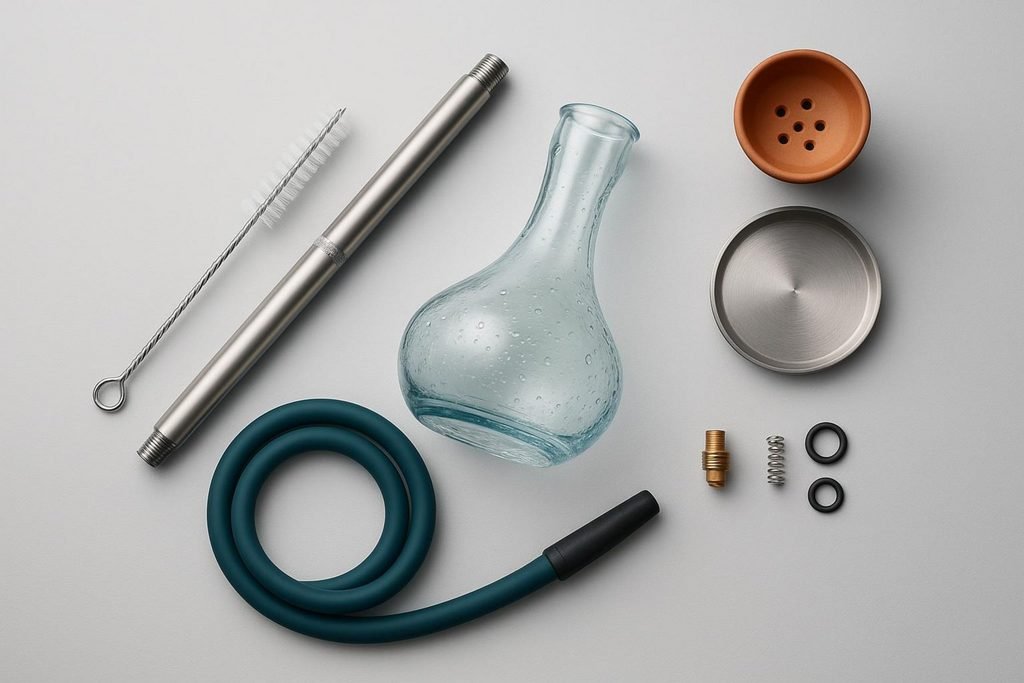
The base, often made from hand-blown glass or thick borosilicate glass, supports the hookah and holds the water. It also provides the open space where vapor collects before it enters the hose. A wide base is less likely to tip over. Clear glass lets you check the water level and see how far the downstem reaches into the water.
The size of the vase affects the pull and the time the bubbles remain in the water. A large vase offers more space for vapor and can hold a bigger cloud. A smaller base clears more quickly when you blow out old vapor, giving each puff a faster response.
Hookah Stem and Downstem
The stem is the main support of the hookah. It connects the hot bowl at the top to the downstem below the water line. Stems are often made from marine-grade 304 or 316 stainless steel, treated aluminum, or heavy brass. The inside of the stem should resist rust, stored flavors, and acidic liquid from fruit or other flavorings.
The center section is called the heart. It holds the hose adapter and the purge valve. The downstem extends from the heart into the base. Its inner width affects the pull. A narrow passage creates a tighter feeling, while a wide passage gives a lighter pull that feels closer to breathing normally.
Hookah Bowl or Head
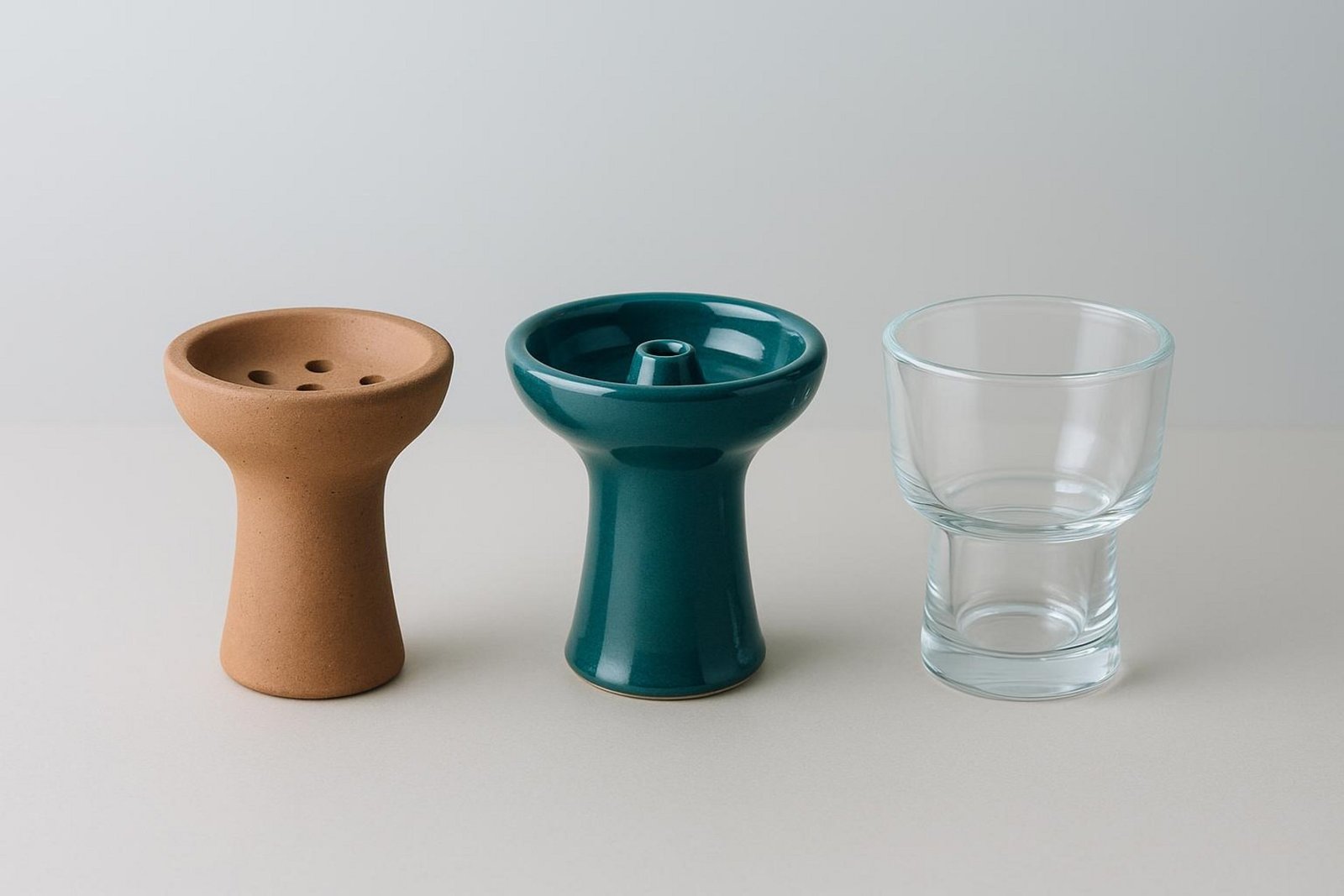
Bowls sit at the top of the hookah and holds the shisha. Bowls are commonly made from clay, glazed ceramic, or borosilicate glass. Natural clay is popular because it holds heat well and spreads it across the tobacco. This helps prevent small areas from becoming much hotter than the rest.
Bowls come in several shapes. Traditional Egyptian bowls usually have a flat bottom with several holes. Modern phunnel bowls have a raised center opening or tower. The phunnel shape keeps wet molasses from running down the stem and helps keep the liquid inside the bowl for a longer, fuller session.
Hookah Hose and Hose Handle
The hose carries the vapor to the user. Older hoses often had leather coverings around metal wire coils. These coils could rust and hold old flavors. Most modern hookah hoses use medical-grade, platinum-cured silicone tubing instead.
Silicone is washable, does not absorb flavor easily, and has no pores where residue can collect. Handles made from machined aluminum, stainless steel, or carbon fiber give the hose a comfortable grip. Together, the handle and silicone tube provide a clean, open air path that can be washed between different flavors.
Which Hookah Accessories Control Heat and Airflow?
Thick, flavorful clouds without a hot or painful throat depend on good heat and airflow control. The tobacco should not touch burning charcoal directly. Accessories such as foil, charcoal holders, and heat devices control how heat and air reach the tobacco.
These tools help connect the strong heat of charcoal with the delicate shisha leaves. Changing the air openings, the barrier between charcoal and tobacco, or the charcoal position lets users keep the bowl at a steady temperature during a longer session.
Hookah Charcoal
Hookah charcoal provides the heat needed to warm the shisha. Because the charcoal sits in the air path used during a session, its quality and burn pattern affect the taste and the gases produced.
Good charcoal burns evenly, stays hot for a long time, creates little ash, and does not give off a strong sulfur smell. Poor-quality or contaminated charcoal can add a sharp taste and unwanted gases to the smoke.
Natural Coconut Charcoal and Quick-Light Charcoal
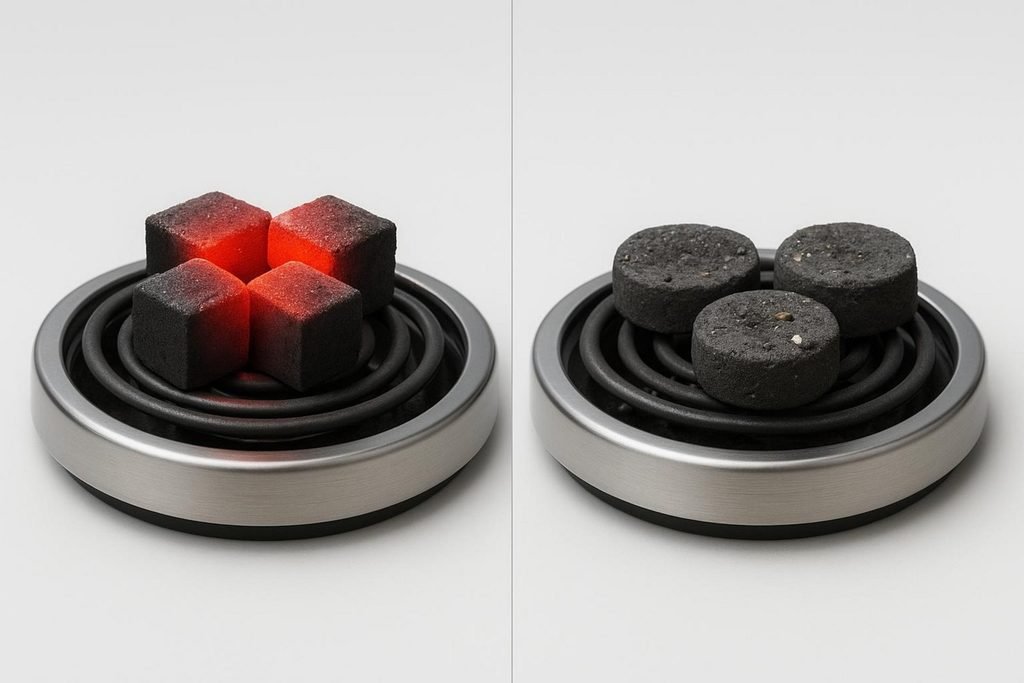
Hookah charcoal comes in two main types: natural coconut charcoal and quick-light charcoal. Natural charcoal is made from compressed coconut husk by-products and does not use chemical lighting agents. It takes several minutes to light on a strong electric burner. Once lit, it burns cleanly, creates less ash, and gives steady, neutral heat for up to about 90 minutes.
Quick-light charcoal contains chemicals such as potassium nitrate or sulfur so it can ignite with a pocket lighter. It can be useful outside when an electric burner is unavailable. However, it burns faster and often hotter, makes loose ash, and can add a chemical taste that hides lighter shisha flavors.
Heat Management Devices
Heat Management Devices, often called HMDs, include products such as the Kaloud Lotus and metal chimney screens. They have become a popular replacement for disposable foil. Made from thick cast or machined aluminum, an HMD sits over the packed bowl and holds the charcoal inside a small chamber with air vents.
An HMD reduces sudden heat changes from the charcoal. It protects the coals from drafts, keeps loose ash out of the tobacco, and lets the user change the airflow over the coals by turning or adjusting the lid.
How Do You Choose Hookah Equipment?
Choosing equipment means matching it to your space, cleaning habits, and preferred pull. A tall brass hookah may look impressive, but it can be hard to store, clean in a small sink, or carry from place to place.
Look at the materials, the size of the inner air passages, and how the parts connect. These features help you choose a hookah that performs well and fits into your daily routine.
What Size Hookah Fits Your Space and Experience?
Hookahs range from small tabletop models under 12 inches tall to café-style models over 36 inches. A larger hookah does not automatically create cooler or thicker clouds. Height mainly affects the amount of air inside the pipe and the resistance of the pull. It does not greatly change water filtration.
Small hookahs have compact bases that clear quickly. They use less water and are easy to wash in a normal kitchen sink. Tall hookahs can offer better stability, a traditional floor-standing look, and longer downstems. They also need more storage space, a deeper container for cleaning, and a longer brush to remove residue from inside the stem.
Should You Choose a Traditional or Modern Hookah?
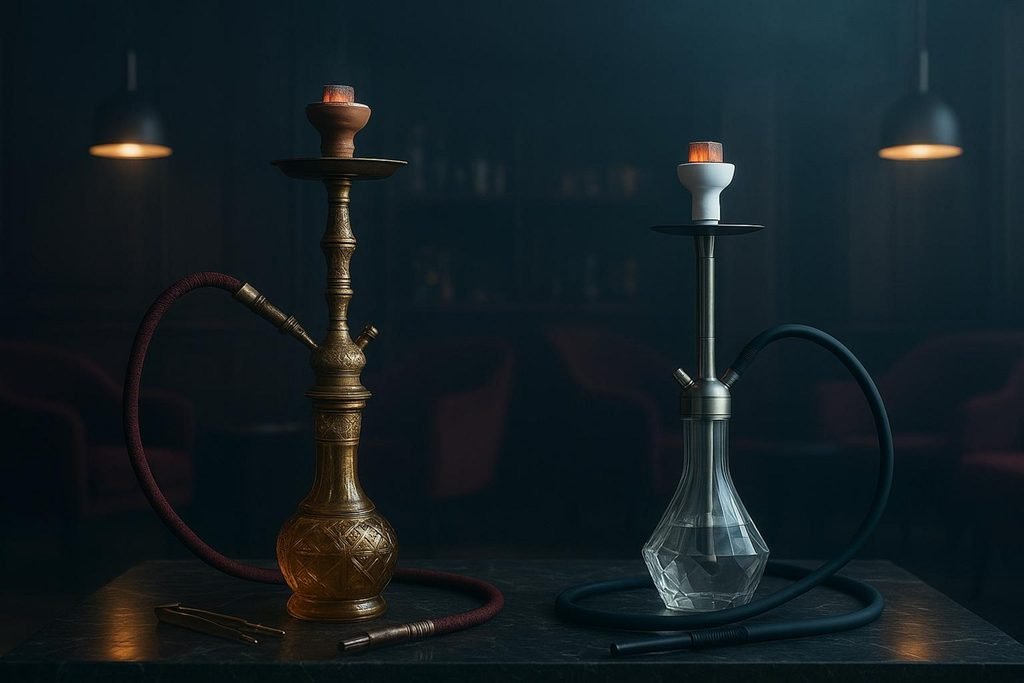
Traditional hookahs, including classic Egyptian and Syrian brass models, often have soldered stems, decorative details, and narrow downstems. Their tighter pull creates the sound and resistance that many long-time users enjoy. These metals may need polishing, can hold old flavors, and often connect to the glass base with rubber seals that wear down over time.
Modern hookahs focus on easy assembly and cleaning. Many use V2A stainless steel, magnetic hose connections, threaded bases, and built-in vertical purge systems. They can usually be taken apart fully for cleaning. Their wider air passages give a light, open pull. They also work well with extra diffusers and different silicone hose kits.
How Do You Set Up a Hookah?
Setting up a hookah involves several small steps, and each one affects the session. Packing the bowl too tightly or using the wrong amount of water can cause harsh puffs, water in the hose, or a very tight pull.
Think of the hookah as a sealed air system. Each gasket and connection should fit correctly so air passes through the tobacco instead of entering through gaps or pulling too much water from the base.
Connect the Stem, Grommets, Tray, and Hose
Start by filling the base with fresh, cold water. The water should cover the end of the downstem by about one-half to one inch, or 12 to 25 mm. Too much water makes the pull heavy and may send water into the hose port. Too little water may not create enough bubbling to cool the vapor.
Place the stem into the vase and secure it with a soft silicone base grommet or a mechanical click-thread connection. Put the charcoal tray over the heart of the stem, then attach the bowl adapter. Insert the hose connector into its port and check that the rubber grommet makes a tight seal. Test the hookah right away. Cover the top of the bowl adapter with your thumb and inhale through the hose. A sealed system should create clear suction without any air leak.
Pack the Bowl for Even Airflow
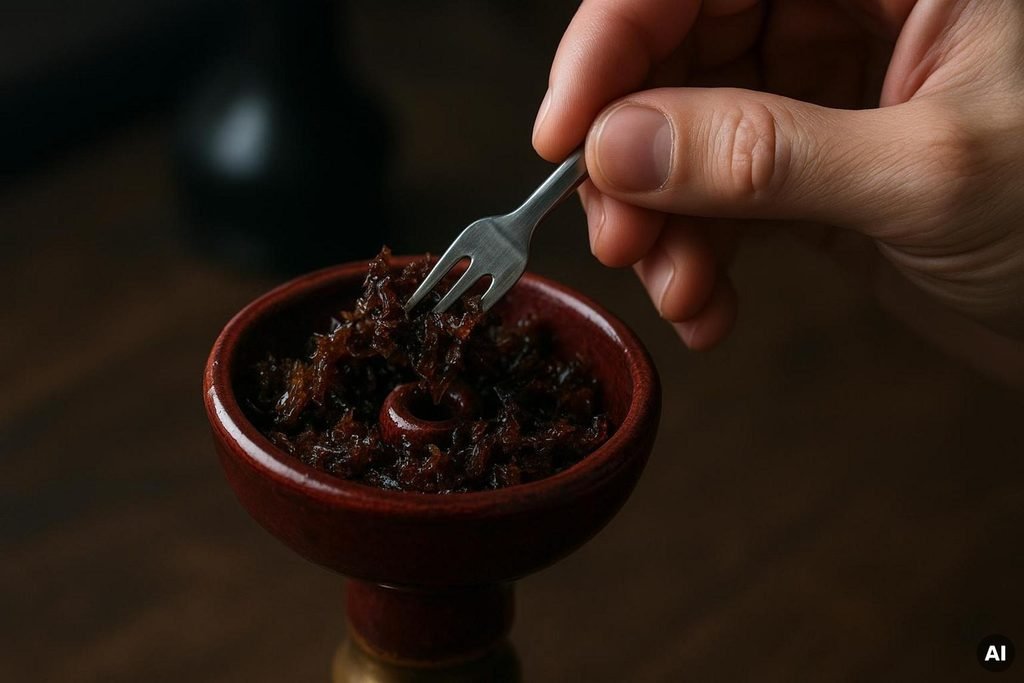
The way you fill the bowl controls how heat moves through the tobacco. For standard blonde-leaf shisha, use a loose or “fluff” pack. Sprinkle the separated tobacco into the bowl until it reaches the inner edge. Do not press it down. Open spaces between the leaves let air move through the tobacco and spread the heat.
Keep the tobacco level and about one to two millimeters below the bowl rim. If wet tobacco touches hot foil or the bottom of an HMD, it can burn at once. This creates a bitter, burnt taste that can spoil the rest of the bowl.
Add Foil or a Heat Management Device
For a foil setup, use thick foil that will not tear easily. Pull it tightly across the bowl and fold the extra foil around the neck. The surface should not sag under the charcoal. Use a foil poker to make even holes in circles. These holes let air pass through. If you are using a phunnel bowl, leave a small solid area in the center.
For an HMD, place its flat bottom directly on the upper edge of the clay bowl. Put the lit coals inside and let the device warm for a few minutes before taking the first puffs. Gradual heating brings the upper layer of tobacco to the right vapor temperature without burning it too quickly.
How Do You Use Hookah Accessories Safely?
Using a hookah indoors involves real heat and air-quality risks. Lit charcoal can reach temperatures above 400°C to 500°C. It also creates hot ash and releases gases that cannot be seen, including carbon monoxide, or CO.
Handle the charcoal carefully, keep it away from flammable items, and provide enough fresh air. These steps reduce the risk of burns, fires, carbon monoxide headaches, and breathing irritation.
How Many Charcoal Pieces Should You Use?
A normal session usually needs two or three cube-shaped natural coconut coals. Too many coals can heat the bowl too quickly, burn the top layer of tobacco within minutes, and create a harsh taste. Start with two cubes placed near the outside edge of the bowl or HMD.
Use strong metal tongs to move the coals about every 20 minutes. Moving them prevents one spot from burning, keeps the tobacco at a more even temperature, and helps the coals burn all the way down to fine ash.
What Ventilation Does Indoor Hookah Use Require?
Burning charcoal releases carbon monoxide and small airborne particles, including PM2.5. Using a hookah in a small room with no airflow can create serious health risks. Dizziness, lightheadedness, and the familiar “hookah headache” can be signs of too much carbon monoxide.
Use a space with active ventilation. An open window combined with an exhaust fan is one option. An active kitchen range hood can also help. A digital carbon monoxide detector with an audible alarm in the same room adds an important safety check during indoor sessions.
How Should You Handle, Light, and Dispose of Charcoal?
Light natural coconut coals on an electric coil burner made for hookah charcoal. Do not heat them in a microwave, on a glass cooktop, or with a butane cooking torch. Wait until every side is glowing red and covered with a thin layer of white ash. Putting partly black charcoal on the bowl can release a strong burst of carbon monoxide and unpleasant gases.
Move hot coals with long, heat-resistant metal tongs. Keep a steel coal holder or deep ash tray underneath them to catch falling embers. After the session, use the tongs to place the used coals in cool water until they are fully out. Never put coals that seem inactive directly into a household trash can, since hidden heat can start a fire.
How Do You Clean and Maintain Hookah Equipment?
Even a high-quality hookah can develop a bitter taste if it is left dirty after use. Shisha vapor leaves glycerin, molasses, and flavor compounds on the inner walls. These residues create stale smells that can mix with the flavors in later sessions.
Regular cleaning keeps flavors clear, allows air to pass freely through the purge valve, and limits the growth of bacteria in warm, wet parts.
Rinse the Base After Each Session
Do not leave used water in the glass base overnight. Old water collects dust, tobacco residue, unpleasant smells, and bacterial buildup around the waterline. Empty it soon after the session, once the glass has cooled to room temperature.
Rinse the vase with warm water, not boiling water. A sudden change in temperature can crack or break hand-blown glass. From time to time, use warm water with baking soda and fresh lemon juice, or a fragrance-free oxygen cleaner, to remove cloudy residue without leaving a perfume smell.
Clean the Stem and Downstem With Brushes
Brushes are the best way to remove sticky juices and moisture from the inside of the stem. Take apart the downstem, heart, and purge parts. Soak removable pieces, such as ball bearings, in warm water to loosen dried residue that may stop the purge valve from working.
Push a long brush through the full length of the stem several times. Use mild, fragrance-free dish soap or a cleaner made for brewing equipment. Hang silicone hoses vertically so they can drain and dry. Store the parts separately in a place with good airflow so moisture does not stay inside the threads or connections.
What Common Hookah Equipment Problems Affect Performance?
Even experienced users can have sessions with mechanical problems. If the pull feels extremely hard or thick clouds become sharp and painful, the cause is usually linked to airflow, water level, or heat.
Checking each part in order can help identify the problem. In many cases, you can restore smooth, thick clouds without throwing away a fresh bowl of shisha.
Why Is the Hookah Draw Too Tight?
A very tight pull usually comes from one of three setup problems: too much water in the base, a bowl packed too tightly, or a blocked hose port. Check the water first. If the downstem is covered by more than one inch of water, the hookah needs more suction to push air through the water. This makes each inhale feel heavy.
If the water level is correct, check the bowl. Pressed-down tobacco may cover the air holes and stop air from moving through the heat source. Also check that the ball bearing in the purge valve is not stuck with dried molasses. The hose should have no bends, moisture, or blockage inside it.
Why Is the Smoke Thin or Harsh?
Thin clouds usually mean there is not enough heat or there is a leak in one of the seals. Check the base grommet, hose connector, and bowl seal. Any opening can let outside air mix with the vapor. If the seals are tight, remove ash from the coals, move them slightly closer to the center, or add one more cube to provide more heat.
A harsh taste usually means the tobacco is getting too hot and starting to burn. Blow gently through the hose to push the hot vapor out of the base through the purge valve. Move the coals to the outer edge of the bowl with metal tongs, or remove the HMD lid. Give the tobacco time to cool before inhaling again.
New hookah equipment is moving toward modular parts, laboratory-quality materials, precise electric heaters, and shared airflow standards. Testing groups such as the ISO/TC 126 working groups are paying more attention to the way waterpipe performance depends on the full air system rather than on guesswork. As precision parts, coconut charcoal, and washable food-grade plastics become more common, using basic heat and airflow principles can help keep every session clean, balanced, and full of steady flavor.
