
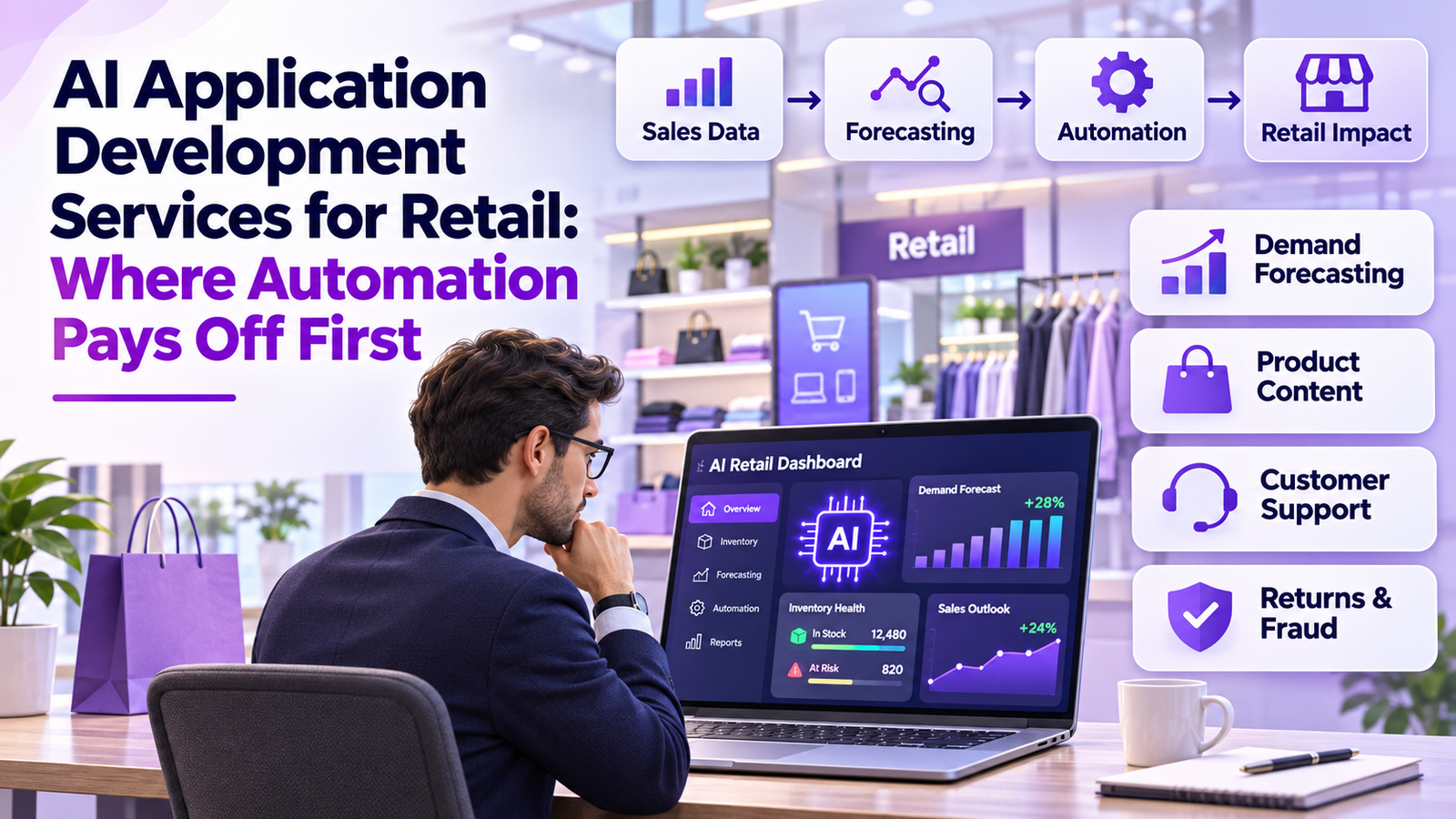
A retailer with forty stores and a web shop has a long list of things it could automate. Demand forecasts. Product descriptions. Chat support. Returns. Shelf photos. Pricing. Everything sounds worth doing, so nothing gets done.
When you’re shopping for AI application development services, the order matters more than the list. Some retail tasks pay back quickly with modest effort. Others look exciting and take a year.
Start Where the Data Already Exists
Retail is lucky in one way, because it produces structured data all day, from sales by item, by store and by hour to stock counts and returns, and that is what makes forecasting and replenishment such common first projects. A model learning from three years of daily sales can often beat a manager’s gut feeling on slow-moving lines, though it struggles with brand-new products that have no history.
Compare that with something like in-store camera analytics. Interesting, yes. But it needs hardware, privacy review, consent signage and weeks of tuning before it says anything useful.
Demand Forecasting and Replenishment
Stockouts lose sales, and overstock ties up cash and ends in markdowns. Better forecasts attack both. Vendor case studies claim sizable gains here, though they come from the people selling the work, so ask for a pilot on your own history before believing a headline number.
A practical start: pick one product category and a handful of stores. For AI ML development of this kind, six months of history is the minimum worth testing against. Forecast weekly demand. Compare the model’s numbers against what the buyers ordered over the last six months. If it wins, widen it. If it only wins on steady sellers, keep humans on the volatile ones.
Product Content at Scale
A shop with twenty thousand items rarely has twenty thousand good descriptions. Generative models can draft titles, descriptions and attribute tags from supplier spreadsheets and photos. It’s one of the faster wins, since the output is easy to review and nothing breaks if a draft is poor.
The catch is accuracy. A model may invent a material or a size that isn’t on the spec sheet. So the setup should only draw from supplied data, flag anything it can’t verify, and send a sample batch to a person before anything is published.
Customer Support Automation
Order status, delivery windows, return rules. Lots of retail support questions repeat, and an assistant connected to the order system can answer many of them without a person. Klarna said in 2024 that its AI assistant was handling work equal to hundreds of agents, then later brought humans back in after quality concerns. The lesson isn’t that it fails. It’s that you need a clean handoff to a person.
Start with questions that have definite answers. Anything involving refunds above a threshold, complaints or safety goes to staff. And measure whether customers’ issues are actually resolved, not just how many chats the bot closed.
Returns and Fraud Signals
Returns cost retailers a lot, and some patterns are visible in the data, like customers who buy several sizes and send most back, or items with unusually high return rates. Flagging these helps merchandising fix the size chart or photo. Be careful with anything that blocks a customer outright. Wrongly accusing a good customer costs more than a few extra returns.
Search and Recommendations
Site search that understands “red dress for a summer wedding” lifts conversion on large catalogs. It’s a solid medium-term project, because it depends on clean product attributes. Messy catalog data produces messy search, however clever the model is.
What to Leave for Later
Dynamic pricing across stores, computer vision on shelves and fully autonomous ordering are real, and each needs more data, more integration and more change in how people work. Put them after the quick wins have proved themselves.
What AI Application Development Services Cost You in Integration Time
Whatever you automate has to talk to the point-of-sale system, inventory, e-commerce platform and maybe an ERP. In practice, this is the slow bit. The model might take weeks. The connections, permissions and testing around it take longer.
Ask any provider of AI application development services which of your systems they’ve connected to before. Ask who maintains those links after launch, too, because AI ML development work in retail lives or dies on the feed from the till.
Picking a First Project
Score each idea on three things: is the data there, is the result easy to measure, and can a person catch the mistakes? Forecasting for one category and product content drafts usually score best. Start with one of them, run it beside the current process for a month, and decide from the numbers.
BiztechCS, which delivers AI/ML Development and GenAI Solutions for mid-market businesses, tends to recommend that same discipline. Good AI ML development for retail, in our experience, is mostly choosing the first project carefully, and saying no to the exciting ones until the basics are paying for themselves.
