
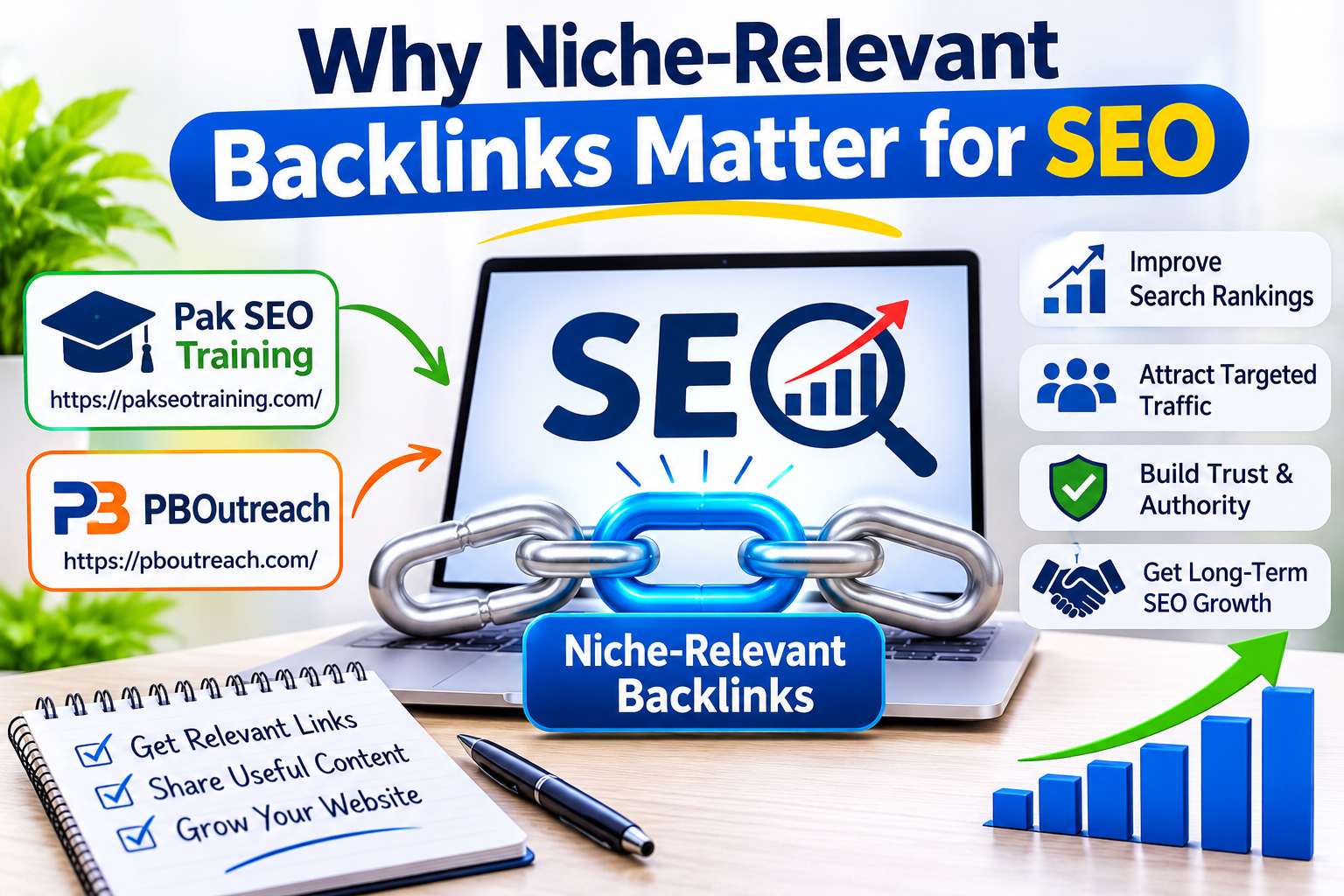
Building a strong online presence requires more than publishing content and optimizing website pages. Businesses also need to establish credibility, improve their visibility, and connect with relevant audiences across the internet. One important part of this process is earning quality backlinks from websites that cover related topics. However, not every backlink provides the same value. A link from a website that shares a genuine connection with your industry can be more useful than a random link from an unrelated source.
Niche-relevant backlinks are links that come from websites or web pages covering topics related to your business, products, or services. For example, a technology company can benefit from references on technology blogs, software publications, and websites discussing digital innovation. Similarly, a home improvement business may find relevant opportunities on interior design, renovation, and home maintenance websites. Choosing relevant sources helps create meaningful connections between websites and their audiences.
For website owners, understanding link relevance is an important step toward developing a sustainable SEO strategy. Platforms such as Pak SEO Training can help beginners and website owners explore search engine optimization concepts, keyword research, and practical techniques for improving website visibility.
1. What Are Niche-Relevant Backlinks?
A backlink is a hyperlink on another website that directs visitors to your website. Search engines can use links as part of their systems for discovering pages and understanding relationships between online resources.
A niche-relevant backlink comes from a website or page that has a meaningful connection to the subject of the linked content. This connection can relate to the website’s industry, the specific article topic, its audience, or the information being discussed.
For example, if you operate a digital marketing agency, receiving a contextual mention from an SEO publication makes sense because both websites serve audiences interested in online marketing.
However, a link from an unrelated website may not provide the same level of contextual value. Relevance should therefore be considered alongside other factors when evaluating backlink opportunities.
2. Why Backlink Relevance Matters
Backlink relevance helps establish a logical relationship between the linking page and the destination website. When a website references another resource that supports its discussion, readers can discover additional information that matches their interests.
Imagine reading an article about improving website rankings. A contextual link to a detailed SEO guide would be useful because it gives readers an opportunity to learn more about the subject.
This type of connection also makes the link placement feel natural rather than promotional. Instead of adding links simply to increase their number, website owners should focus on providing references that improve the overall reading experience.
Relevant backlinks can also bring targeted referral traffic. Visitors arriving from websites within the same industry are more likely to have an interest in your products, services, or information.
3. Improve Your Website’s Topical Authority
Topical authority refers to how well a website demonstrates knowledge and coverage of a particular subject. Publishing detailed content and earning relevant references can help establish your website as a useful resource within its industry.
For example, a website focused on digital marketing can publish articles about technical SEO, keyword research, content marketing, link building, and website optimization.
When other relevant publications reference these resources, they can introduce your content to a wider audience and strengthen your website’s reputation within the industry.
However, backlinks alone do not establish topical authority. Your website also needs useful information, well-organized pages, accurate details, and consistent coverage of its main subjects.
Combining quality content with relevant editorial references creates a stronger foundation for long-term organic visibility.
4. Attract More Targeted Referral Traffic
One of the practical benefits of niche-relevant backlinks is the opportunity to attract visitors who are already interested in your industry.
Suppose you own an online store selling fitness equipment. A link from a fitness blog or health publication can introduce your products to readers who are already researching exercise and workout solutions.
This audience connection can be more valuable than receiving random visitors who have no interest in your business.
To attract relevant traffic, focus on websites that publish content for your target customers. Review their existing articles, audience interests, and the subjects they regularly cover.
You should also make sure the destination page provides information that matches the expectations created by the linking article. A relevant link should lead visitors to something genuinely useful.
5. Build Trust and Industry Credibility
Trust is an important factor in online business growth. Customers are more comfortable exploring companies that demonstrate knowledge, professionalism, and a positive reputation within their industries.
Being mentioned by relevant publications can help introduce your brand to new audiences. These mentions may also create opportunities for professional relationships, partnerships, and future collaborations.
For instance, a software company featured in an established technology publication may gain exposure among readers interested in software solutions.
Similarly, a financial services provider mentioned in a business or finance publication can reach an audience interested in financial topics.
The value of these opportunities depends on the publication’s editorial quality, audience, and the usefulness of the content being shared.
6. Support Long-Term SEO Growth
SEO is a continuous process that requires regular content development, technical improvements, and authority building. Niche-relevant backlinks can support this process by helping search engines discover your pages and understand how different online resources connect.
However, backlinks should be treated as one part of a broader SEO strategy rather than a guaranteed way to improve rankings.
Focus on earning references from genuine publications, creating useful resources, and developing relationships with websites that share your target audience.
Avoid building large numbers of unrelated links simply to increase backlink counts. A smaller number of meaningful editorial references can be more useful for readers and your overall online reputation.
Consistency is important. Continue publishing valuable content and look for legitimate opportunities to get your work referenced by relevant websites.
7. How to Find Quality Niche-Relevant Backlink Opportunities
Finding suitable websites requires research and careful evaluation. Start by identifying publications that cover your industry or discuss subjects related to your business.
You can use Google searches, competitor backlink analysis, industry directories, and SEO tools to discover potential websites.
Once you find a prospect, review its content and audience. Consider the following points:
- Topical relevance: Does the website publish content related to your industry?
- Content quality: Are its articles informative, original, and useful?
- Audience engagement: Does the publication appear to attract genuine readers?
- Website visibility: Does it have a meaningful presence in search results?
- Editorial standards: Does it maintain reasonable publishing and linking practices?
- Link context: Would your website provide useful additional information to its readers?
Do not evaluate opportunities using Domain Rating or Domain Authority alone. These third-party metrics can help with research, but they do not guarantee search engine value or traffic.
8. Use Guest Posting for Relevant Link Opportunities
Guest posting is one method of introducing your expertise to audiences outside your own website. It involves contributing useful articles to relevant publications and sharing additional resources where appropriate.
For example, a digital marketing professional could contribute an educational article to an SEO blog covering website optimization or content strategy.
The most important consideration is the quality of the article. It should provide genuine information rather than exist only to accommodate backlinks.
Businesses and marketers exploring publisher outreach can use PBOutreach as a resource for discovering guest posting opportunities, publisher connections, and link placement options.
Before approaching publishers, research their content requirements and understand the subjects they accept. A personalized pitch that explains how your proposed article benefits their readers is generally more appropriate than sending generic promotional messages.
Remember that paid placements intended for advertising should use appropriate link qualifications, such as sponsored or nofollow, in accordance with search engine policies.
9. Avoid Common Backlink Building Mistakes
Even when building links from relevant websites, poor decisions can reduce the value of your efforts.
One common mistake is focusing entirely on website metrics without checking actual content quality. A website may display impressive third-party authority scores but have little connection to your industry.
Another mistake is using the same exact-match anchor text repeatedly. Natural linking practices should include descriptive phrases, brand names, and other contextually appropriate wording.
You should also avoid automated link-building services, excessive reciprocal exchanges, and publishing low-quality articles across unrelated websites.
Google identifies manipulative link schemes, including certain paid links and excessive link exchanges, as link spam. Paid promotional links should be properly qualified rather than treated as guaranteed ranking signals.
A careful approach helps protect your website’s reputation and supports a more sustainable SEO strategy.
10. Measure the Performance of Your Backlinks
Building backlinks is only one part of the process. You should also monitor how your link-building activities contribute to your website’s overall performance.
Google Search Console can help you review external links pointing to your website and monitor organic search performance.
Analytics tools can provide additional information about referral visitors, engagement, and conversions.
Pay attention to whether backlinks generate relevant visitors, whether linked pages receive organic visibility, and whether your website is attracting potential customers.
Remember that a backlink does not automatically produce higher rankings or sales. Its practical value depends on several factors, including relevance, placement, audience interest, and the quality of your destination page.
Regular monitoring helps you identify successful opportunities and improve your future link-building decisions.
Conclusion
Niche-relevant backlinks are an important consideration when developing a sustainable SEO strategy. They help connect related websites, introduce your content to interested audiences, and create opportunities to build industry credibility.
Instead of focusing only on backlink quantity or third-party authority scores, prioritize relevance, editorial quality, and genuine audience value. Combine these efforts with useful content, proper website optimization, and consistent performance monitoring.
A thoughtful backlink strategy takes time, but focusing on meaningful industry connections can help businesses develop a stronger online presence and create long-term opportunities for organic growth.
