
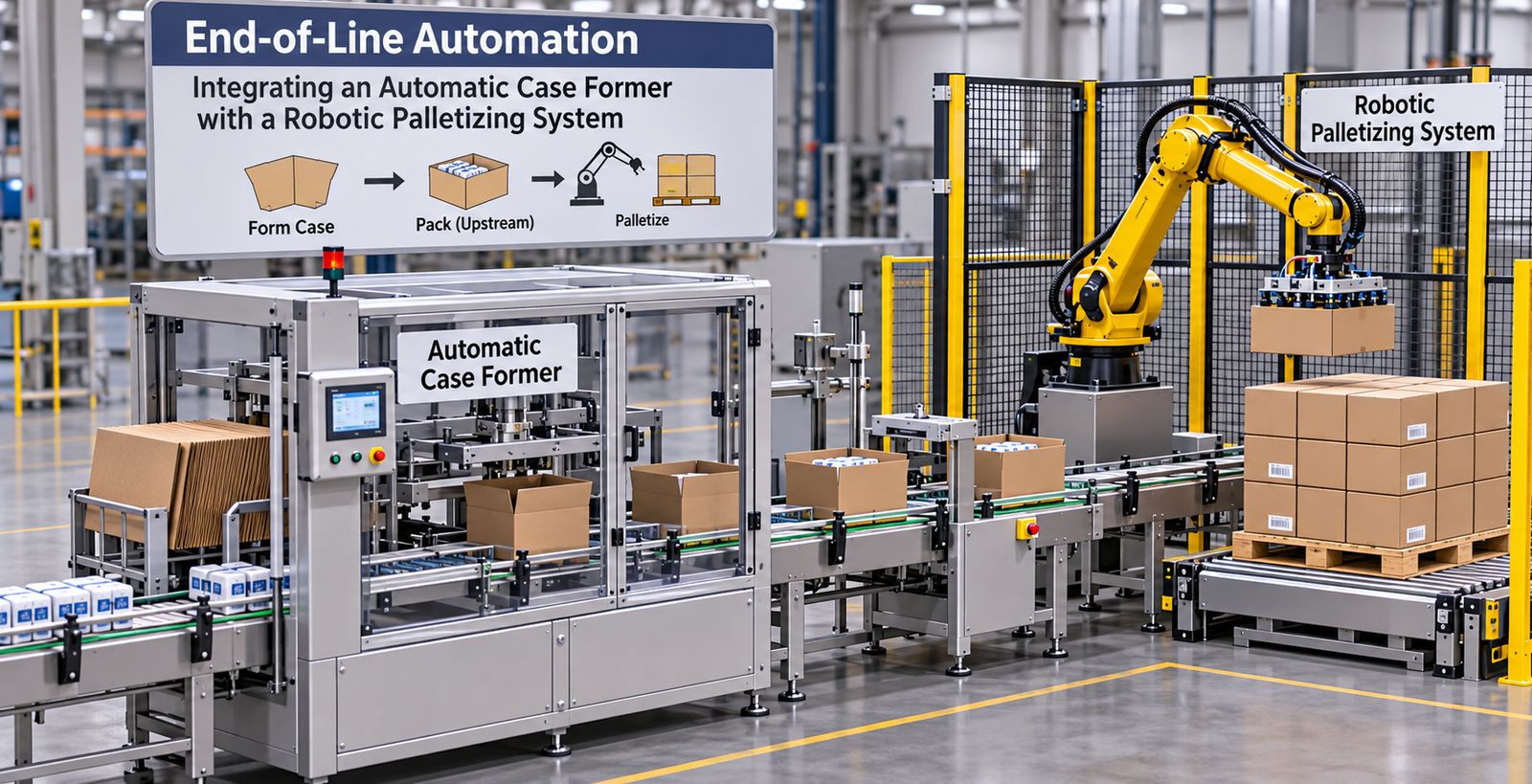
The end of the line is where a lot of plants quietly lose money. Someone folds cases by hand. Someone packs them. Someone else stacks pallets. Every step depends on people showing up and keeping pace. Putting a case a robotic palletizer together changes that. The whole stretch, from cardboard to a pallet, becomes one steady flow.
Why even bother automating it?
Automating case erecting and palletizing really does matter. I have seen that these jobs are dull and draining. When folks get worn out, they put cases together. Get hurt more often. It is getting tougher to find people for this kind of work. Automating keeps your output steady. It also makes the job safer.. It lets the rest of your crew handle the work that truly needs a human brain.
The process starts with an automatic case former, which picks a blank from a magazine, opens it, folds the flaps and seals the bottom. The finished case rolls on a conveyor to the packing station, where products are set by hand or by machine. The finished case rolls on a conveyor to the packing station, where products are set by hand or by machine. Then the case is closed, labeled and sent to the palletizer.
From there, a robot grabs the case. The robot lifts each case. Places it on the pallet in a set pattern. When the pallet is full, the pallet is ready for shipping. I notice that each step hands the case to the step, so nobody waits.
Speed is the priority. The case former must move fast. It has to keep up with the packing line. The palletizer also must keep up with the cases. A small amount of buffer space between them helps absorb the interruptions that always happen.
Case quality is the point. Palletizing robots needs cases. They expect cases that match the size and weight. A case that is not built properly or that is packed full can cause a grip problem. This can make the stack lean. No one wants to restack that pallet.
Then there is communication. Machines that talk to each other can stop, restart and recover together to avoid building up. Safety cannot be an afterthought. Safety means controlled movements, safe access points and proper guarding to keep people safe around robot cells.
Picking the palletizing system
I am checking the palletizing system. Robots are common because they adapt easily. One robot can handle box sizes, stack designs and pallet kinds by switching its program. That helps a lot if you deal with formats. Pick a gripper that fits your boxes, whether it works with suction, clamping or both. Make sure to check the reach. Also check the payload against your load.
I find the software side counts well. When a robotic palletizing system has an interface, operators can set up pallet patterns themselves. That means changeovers and less time spent on training.
Plan the layout first. Before you install anything, figure out where empty pallets come in, where full pallets go out and where forklifts will move. A clean layout helps you avoid crossings and traffic jams. Leave some room around the palletizing cell so people can do maintenance. You can always add equipment later if you need more. Good layout planning pays off: a smart plan often saves money than a machine would.
Set goals that you can measure, because measuring keeps focus sharp.
Decide what success means for your team, so everyone understands the target.
Think about cases per minute, stoppages and labor hours saved, because those numbers show progress.
Check those numbers after startup. You will see how you are doing.
Many plants find that steadier quality and safer work are worth more than speed.
Keep it maintained
Even an integrated system requires maintenance. Belts, grippers, sensors and glue or tape heads need scheduled checks. Small fixes performed prevent stoppages that cause the most damage.
In short
Bringing case making, packing and pallet stacking in one flow eases the load on your team. It lifts case quality. Makes output easier to predict. At Tecma Aries, we build end‑of‑line lines that fit your products, your speeds and your available space. We adjust the lines as your production changes.
If you want a path from blanks to pallets, a palletizing setup that works well with automated case erecting is a solid step forward.
